Blog

  • Getting healthy? It’s 80% diet  100% culture..

    Getting healthy? It’s 80% diet 100% culture..
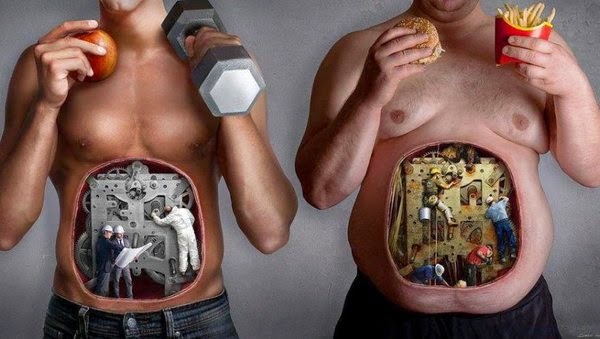
    A Very Wise Sage Once Told Me Fitness is 80% Diet. 
    Having worked in and around gym’s for the last 16 years I have have worked with fitness professionals, body builders and athletes. I have also  endured my own journey towards fitness and seen many patients change their physique. It’s no secret diet and exercise are the cornerstones of fitness.  For me the holy grail of fit was more raw foods and high intensity interval training or metabolic training. Real changes are those that transcend your schedule and lifestyle, which brings  me to my next statement.


    You MUST Change How You View Food.
    Our ancestors must have gotten a completely different palate, keeping in mind that spices were reserved for the privileged. Food was most likely bland and it was most certainly sparse, my parents grew up in German occupied Greece and even one generation ago, there were people starving to death.  The take home point is that it’s only until recently that our culture has put so much emphasis on eating as a social event. Historically food has been viewed as fuel.


    Dinner and Drinks?
    I have many patients and friends who ask how to improve their body composition(less fat or more muscle), and inevitably the conversation moves to dinning. Going out to dinner has become a common pastime and a weekly occurrence. The individual looses control of the preparation of the food and seldom asks for nutritional information, since they’re going out, one may figure “where’s the fun in that?” The problem is that just an appetizer alone can account for all of your daily allowance of fat and calories as explained in this Good Morning America post. Add a few beers or glasses of wine at around 150 calories each and you can see even a modest meal turns into a  4000 calorie event. 

    Convenient, but obese kids make obese adults.


    The Good News? We’re Not the Fattest Country Anymore!
    Mexico has surpassed the U.S. as the fattest country in the world, perhaps due to the infiltration of Starbucks. All kidding aside, our super-sized portions and Mocha-chino Grande (600 calories) have consistently ranked us among the fattest in the world. A simple way to lose excess weight is to steer clear of drinking calories. 


    Prepare for the End – the Bottom End of Course.
    Food preparation sounds like a big task, but it doesn’t need to be. Baking 5 or 10 chicken breasts at the beginning of the week can give you all of the salad with chicken all week. Boiling 2 dozen eggs, also an excellent protein rich and calorie poor option for breakfast or snack. Put some broccoli florets in a zip-lock and grab some hummus for a balanced, low calorie filling snack!  Greek yogurt is one of the packaged foods that you can eat and feel great about.  There are tons of great ideas in magazines and online, but the sooner you appreciate the power of preparing your meals the faster you’ll be feeling and looking great.


    Diets Don’t Work–You Need a Lifestyle Change
    Understanding this is a total shift in how to live and not a diet.  Gradual changes are ones that cause less stress and will be more sustainable.  Limiting half of the starchy carbohydrate that you typically eat at a sitting will be a great stepping stone to eventually eliminating them altogether.  Gluten and sugar have a major impact on inflammation, insulin levels and cardiovascular health. Dr. Seaman did an interview that can be found here explaining how our diet is killing us slowly.

    It’s better to look good than to feel good
    Looking good and feeling good are very much intertwined, in explaining the way to a fitter physique we also extoll the benefits of good health. Not everyone wants a beach body and by following some of the guidelines we have set forth, will not only get you looking better but also improve your cholesterol and triglyceride counts. It’s important to keep in mind why we would want to change, it’s not all about aesthetics.

    You look marvelous darling

    Everything in Moderation
    We all enjoy a night out and if you’re active and practicing good eating habits most of the time you can enjoy a nice restaurant, but overall, most may want to develop other forms of entertainment.  Active hobbies would have a definite impact, increasing activity levels as well as limiting outside meals. Personally, my wife and I have shed our inhibitions and frequently dance like no one is watching in a club full of people way younger(at least chronologically).

     Today
    we provided principles, so you can adapt your own protocols, don’t
    hesitate to contact us with questions. 

    Please let us know you visited our blog by liking, commenting & sharing.


    Dr. Serafim is a Rehabilitation and a Strength and Conditioning
    Specialist. He lives and works in the Exton PA area and has devoted
    himself to furthering his understanding of movement related disorders.
    He teaches continuing education and operates a private practice. More
    information can be found at Kinetx.org and feel free to like us at 
    our facebook page.
  • PLANTAR FASCIITIS

    PLANTAR FASCIITIS

    PLANTAR FASCIITIS

    Comprehensive Strategies For
    Addressing Plantar Fasciitis
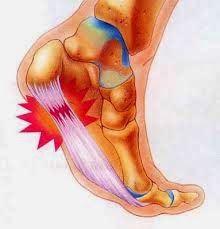
    In today’s clinical environment, plantar fasciitis is a
    common and debilitating condition. “Plantar fasciitis is the most frequent
    cause of heel pain in adults, accounting for 15% of visits to podiatrists and
    approximately 9% of running injuries”(1).   The purpose of this article is to discuss
    comprehensive strategies that include instrument assisted soft tissue
    mobilization (IASTM) and functional evaluation techniques. Irritation to the
    plantar fascia is widely treated with immobilization and injections. Unfortunately
    these interventions are incomplete and short sighted.  When faced with these types of complex injuries, each provider should ask; is the treatment we are rendering comprehensive? 
    Many of the patients I have
    treated have most likely seen other types of providers before
    seeking our care as a last alternative. Chiropractic is touted as treating the
    root of the issue, but if we seek to only provide short term relief, how can
    we hold ourselves to that higher standard.
    Form & Function;
    Static analysis and Orthotic correction (shoe inserts)  is a common
    treatment for plantar pain. Traditional approaches to heel pain have come up short fully addressing plantar pain. It’s been brought to my
    attention that much of the chiropractic (and physical therapy) profession is
    unaware of the rehab renaissance occurring. Functional movement analysis has
    allowed those who utilize it to find faulty movement patterns as well as muscle
    imbalances that are the underlying causes of dysfunction. The work of Janda,
    Liebenson, and Cook have provided us with screening tests that gauge the
    “quality” of movement and identify areas of overuse; thereby identifying
    underlying causes of injury(2).
    A staple of the functional testing is the squat, in its
    performance we sometimes note the subject’s heels lifting off as the squat gets
    deeper.  This would be indicative of
    calf/ankle hypo-mobility. Having the patient repeat the squat with the heels in
    the elevated position and having them perform it with greater competency would
    further validate calf and foot shortening.  If you cannot deep squat, it may be because of your ankle mobility and that in turn is a major underlying reason your heel hurts!
    Plantar fasciitis is surely a musculo-skeletal issue. Let’s
    investigate the work of Tom Myers “Anatomy Trains” to see what else may be
    associated with the chain of soft tissue(muscle/ ligament/ tendon) known as the plantar aponeurosis.

    As we can see from the illustration above, there is a long
    track of fibrous tissue that runs contiguously from the plantar aspect of the foot to
    the top of the skull; therefore shortening  the muscle along the superficial back line
    would shorten the continuous chain of connective tissue-in other words not only are bones connected to bones, but muscles are connected to muscles. Tightness in one muscle can and will affect other muscles along the same line.  In my own clinical experience as well as medical literature, shortened
    calf/ heel chords are commonly noted in cases of plantar fasciitis (3). While
    almost ev
    eryone knows how to isolate the Gastrocs calf group, affecting the
    Soleus calf group seems to elude both patient and doctor.  Most patients that present to my office with a plantar pain issue have NOT been shown this simple and ultimately effective move. Feel free to contact us for assistance in performing the Soleus mobility drill.

    Treatment;
    When treating movement related conditions it’s best to use everything available. Massage, Release technique, avoidance strategies, mobility drills and strengthening rehab procedures. Restoring the amount the ankle can bend upwards (dorsiflexion) is a primary goal.  Muscle energy techniques (contract/relax stretching) should also play an
    integral role in the muscles situated along the superficial back line as well
    as any tight/ overactive muscle groups. Restoring ankle Dorsiflexion through joint
    mobilization (Cook’s tall half kneel) of the ankle in addition to manipulation
    of the ankle joint will also aid in restoring proper biomechanics. Finally
    we need to address foot stability, as Boyle’s joint by joint approach(4) tells
    us, it’s an area designed for that role. 
    Self care and long range goals should include activities
    that would affect the superficial
    back line (Yoga). Finally, sparing strategies
    cannot be ignored, as self care will move the patient towards independence in
    their favorite activities. There is a wealth of tools and techniques available
    to us, and as my father the carpenter often told me “the right tool at the
    right time results in the best job”.
    Correct form for the tall half kneel.


    1. Ranawat, Chitranjan S., and Rock G. Positano. Disorders
    of the Heel, Rearfoot, and Ankle
    . New
    York: Churchill Livingstone, 1999. Print.
    2. Page, Phillip. “3; Chain Reaction.” Assessment
    and Treatment of Muscle Imbalance The Janda Approach
    . N.p.: n.p., n.d. N.
    pag. Print.
    3. Garrett, T., and Pj Neibert. “The Effectiveness of a
    Gastrocnemius-soleus Stretching Program as a Therapeutic Treatment of Plantar
    Fasciitis.” Journal of Sports Rehabilitation 12th ser. 22.308
    (2013): n. pag. Web.
    4. Boyle,
    Michael, Mark Verstegen, and Alwyn Cosgrove.
    Advanced in Functional
    Training: Training Techniques for Coaches, Personal Trainers and Athletes
    . Santa Cruz, CA:
    On Target Publications, 2010. Print.
  • Untitled Post

    Untitled Post

    The Secret to Getting Lean & Staying Lean part II
     The first part of this post can be found here.

    8Time to turn up the intensity; Part of the problem with the traditional “Nautilus” circuit is that it’s very difficult to get your heart rate up. You’d think that if the  repetitions were performed quicker the intensity would increase. The reality is that the chances of injury would greatly increase while the level of intensity would stay the same. For those who have first developed capacity (post 5 months of training) adding High Intensity Interval Training (HIIT) is the ultimate calorie burner. It’s also been shown to provide the the best hormonal response. This type of exercise is found in Crossfit “Cubes” as well as Russian Kettle Bell training. For the readers who still insist on doing large amounts of cardiovascular training, the training should be varied and could include Interval and Fartlek training. There are also a variety of cardio classes that incorporate compound movements, I know my wife really loves her Body combat classes, even though we did have to correct some movement patterns to avoid her getting injured by it.


    9. You Can Never Be Consistent Due To Nagging Injuries; Lacking duration may be one of the biggest obstacles to consistent routines needed to achieve your fitness goals. Studies have shown that when athletes get injured they  have a 30%-90% drop out rate. Evidence suggests that injury is one of the greatest impediments to getting lean and staying lean.   
    Awareness of when, why and how athletic injuries occur is paramount to maintaining your fitness routine. While my main goal is to find the “weak links” that causes or contributes to injury, I also need to educate exercise professionals in some of the risk factors. Pre-program baseline testing as well as ACSM risk stratification should be used as a screening process in ANY workout routine. I enjoy working with trainers in this regard, as well as prescribing corrective exercises.

    10. You’re Obsessing Over The Scale; It’s true, we all do it, but is there something to be learned from our bathroom nemesis? Body composition analysis is a very big part of planning a nutritional plan. A popular way of figuring out your muscle mass/fat content is Bio-impedance, having this test performed before you start a fat loss program provides a baseline AND your metabolic rate. If you remember in our first blog item 1 and 3 in Part 1 then you know the caloric equation must be less or equal to the Metabolic rate. The number on the scale can be a poor barometer of progress when trying to get lean. The more muscle you have the better you burn calories, starving yourself because “it’s not working” is just keeping you from getting stronger and ultimately leaner!! 
    A better barometer is  anthropometric measurements or simply how your clothes fit.

    We can run a bio-impedance test at our office, it makes that scale a lot less scary!

    11. A Time for Every Season;  Periodization is a major component in how we, as strength specialist
    design a program. Professional athletes have 4 distinct periods in their
    training, it’s improves their effectiveness and reduces the amount of
    injuries. Preseason, In-season, Post-season, Off-season– all have
    their specific purpose and what works at that level should work at any level. This could have been number one, because everyone, everywhere has likes and dislikes. Some love cardio and just run all year round, some love the gym and all they do is weight train. They never change a thing and when they plateau, they wonder……what happened???  The truth is that the more we do something, the easier it gets; because like a hot bath, we accommodate to it.

    12. Patience, No worries; We as American’s are a fast food society, we want everything convenient and we want it 10 minutes ago. That being said, getting and staying in shape is a long road. Knowing the correct direction certainly lessens the travel time, personally I struggled for years until my muscle mass increased and my workouts got more intense (HIIT).  Patience and stress are mental components that can greatly alter the success of an individuals program. Cortisol is a stress hormone that can trick the body into not burning belly fat, as noted in a study done by Yale University. Resistance training has a positive effect on stress and fat loss, for more on cortisol response and high intensity training click here.

    I’d love some feedback from my fitness professional friends on this post, the links to the local fitness establishments are some of the few quality establishments in the area.

    Dr.
    Serafim is a Rehabilitation and a Strength and Conditioning Specialist.
    He lives and works in the Exton PA area and has devoted himself to
    furthering his understanding of movement related disorders. He teaches
    continuing education and operates a private practice. More information
    can be found at Kinetx.org and feel free to like us at our facebook page.


  • The most common reasons you haven’t lost fat(notice I didn’t say weight).

    The most common reasons you haven’t lost fat(notice I didn’t say weight).

     The Secret to Staying lean; Part one
    We need to start our path to fitness somewhere,  for many of us the emphasis is on getting leaner. After a lifetime of personal struggles, I have found the “secrets” of staying lean year round.
    1.  A SIMPLE EQUATION 
    CALORIES IN  must equal CALORIES OUT.
    If you exceed your caloric intake it’s stored as fat.
    If your caloric intake is insufficient you burn fat.
    The key to this is to know and adhere to your BMR (Basal Metabolic Rate).
    Initially calorie counting will be a necessary evil, but most get an idea of portion and amounts very quickly. 

    2. LACKING FREQUENCY; I often relate the way metabolism works to a furnace, the more you stoke it the hotter it burns and the more calories are expended. How can we affect our metabolism?
    Our metabolism can be increased by any increase in our activity. Spacing out activity is a great way of elevating our metabolism several times a day, whether it’s taking the stairs instead of the elevator, taking a afternoon stroll or giving a piggy back ride to the kids. The more instances you can build in the faster you will lean out. Frequency can also be impacted when you can’t get to your work out place, so I really stress adding alternative exercise techniques that require no equipment, when you can’t make it to the gym.

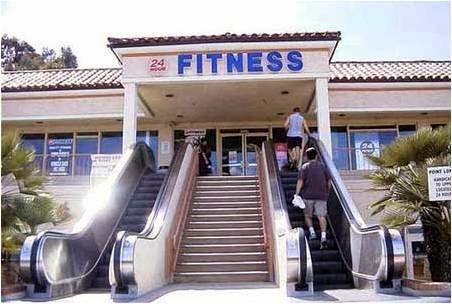
    This is only trumped by those who circle the parking lot looking for the closest spot.

    3. COMPACT vs. FULL SIZED; compact cars are very fuel efficient, but in the case of getting lean we want to be fuel INefficient.
    Muscle mass burn calories at a rate of: 10 calories per pound/ per day at rest.
    Greater muscle mass also burns more calories during activity (exercise or activities of daily living). So the more muscle we can put on our frame, the more calories are burned.  Women sometimes worry about getting too muscular and so they avoid working with weights, without the increase in muscle it’s that much more difficult to get lean.
    Don’t worry ladies, no one is looking like a bodybuilder without the help of male hormones(steroids). Recent studies have shown that women have a good capacity for building muscle, it’s just that the distribution is different(larger % in the lower half)1.

    My guess is that she’s been exposed to male hormones..

    4. FEARING THE FAT; If you fear the fat, you may not loose the fat. As per Barry Sear’s The Zone, your body has a capacity to burn a certain amount of fat, protein and carbohydrate.
    If an individual over indulges in any category, it gets stored as fat. Sears calls for a 40% carbohydrate 30% fat and 30% protein. The Atkins diet is another system that touts increasing fat intake over carbohydrate intake, but some who use Atkins seem to overindulge in the fattier proteins

    and saturated fats(which wasn’t the original intention) .

     5. NOT ENOUGH WHOLE FOODS; Most of what we truly need from the super market can be found on the perimeter of the store.  MOST of the processed food and snacks occupy the center isles. The majority of processed and snack foods are high in carbohydrates, including the “diet food”. Whole foods on the other hand, are high in macro-nutrients (vitamins from foods not encapsulations), are typically a lower glycemic index and overall lower in calories. Whole foods also have a smaller caloric footprint with a higher volume, so they are more filling and less fattening.

    Sure it’s sugar free, I bet it’s not calorie free


    6. GET YOUR ZZZZZZ’s; Many of us are not getting restful deep sleep, and there are some important hormonal implications here.  MANY studies show that hormones responsible for the growth and repair of muscle occur in deep sleep.  Even if you’re doing everything right –if your not sleeping, you may be robbing yourself of muscle growth.   We discussed how greater muscle mass burns more calories in #3; but greater muscle mass (and muscles used) also cause a larger hormone response, therefore positively affecting muscle growth.  All of these factors lead to the same premise; 
    use exercise movements that recruit as much muscle as possible–tire them out AND get some sleep!


    7.  KEEP IT SIMPLE? Eh no; Exercise can be classified into two major categories, simple and compound. The typical gym is geared towards simple exercises, any exercise using one muscle is simple (i.e. bicep curl). Compound exercise uses multiple muscle groups and many times the whole body (squat, plank). The body’s response to these two types of exercises is very different. Without getting too technical, your body grows a lot more muscle by doing compound movements, compound movements are also functional  (mimics daily activities) and are discussed here.  
    There is a definite movement in the fitness industry towards compound and functional movement. In our area there are several of these types of workout centers that are extremely knowledgeable and reputable. While each center is different, each is qualified and use a graduated approach (not letting you get too far over your head).  Functional movement awareness exists in these establishments and is discussed here. 

    In part two of this series we will discuss the paradigm shift in fitness towards compound movement and the differences in our fine local establishments that provide such services.
      
    In conclusion I should go back to my opening statement, here I am with my kids after some good ole’ fashioned functional exercise (digging in the sand). 
    (Advanced apologies for the excessive display of me.)


    Dr.
    Serafim is a Rehabilitation and a Strength and Conditioning Specialist.
    He lives and works in the Exton PA area and has devoted himself to
    furthering his understanding of movement related disorders. He teaches
    continuing education and operates a private practice. More information
    can be found at Kinetx.org and feel free to like us at our facebook page.


    1.American College of Sports Medicine, ACSM Fit Society® Page, Summer 2004, p. 4-5.

  • Is it the end of the Ice Age? When to use heat and or ice…

    Is it the end of the Ice Age? When to use heat and or ice…

    Written by Dr. E. Serafim


    “I can never get it right Doc, when it hurts, should I put heat or ice on it?”

    “But there was shrinkage!”

    This is the most common  “modality” question presented to me on daily basis & I  always answer the same way…It Depends.  
     There are several items to consider;
    -type of pain (chronic vs acute)
    -why is it hurting (trauma vs overuse)
    -is there any nerve involvement  
    we’ll address all of them in this week’s blog…….

    Chronic Vs. Acute
    The amount of time your injury has been bothering you will  often help us discern which type of pain you are experiencing.  Acute injuries usually involve trauma while  Chronic pain is defined (but debated) as any pain pattern present for longer than 6 weeks.
    The take home message here is that if you just injured yourself (acute) and the area is showing signs of “Acute inflammation” DO NOT USE HEAT on the affected area. If you have one or more of these signs (compliments of nature reviews), you’re experiencing a acute episode of pain. In today’s busy world many of us choose to ignore pain, but if you Live to move,  read on…

    “I’m tough, I can take it”
    Pain affects us in ways that both benefit and cause us harm, pain is our body’s alarm system. It tells us when something is wrong and limits our movements to prevent furthering the damage that has already been done.  Limiting movement may seem like a good idea, but keeping the theme of the blog should give you an idea of what I’m going to say next. Painful movements change your movement for the worse, creating force multipliers secondary to poor/improper biomechanics, changing your muscle length and causing joint degeneration (arthritic changes) 1. The faster an injured individual can eliminate pain, the less of a chance it has to become chronic (learned).

    When traffic is actually a good thing..
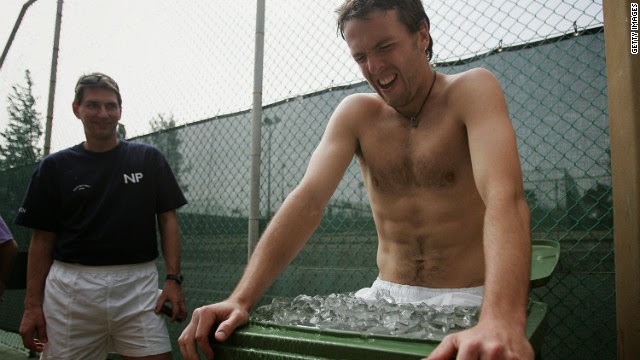
    Ice (cryotherapy) is a great natural way of turning off the bad effects listed above, which in turn gets the individual one step closer to pre injury status. Pain is carried to the brain mostly on our smallest and most abundant nerve pathways( C fibers). The way cryotherapy works on pain is that if the small fibers carrying pain signals are flooded with signals carrying cold, the pain signals cannot get through for the brain to perceive. This process known as Lateral Inhibition and it’s is a great way to intervene in the pain pattern and provide a “reset” for the body. Pain can be learned and that’s a contributing factor for chronicity.

    .Ice, Ice baby?
    For ages the industry standard for controlling the sings of inflammation would be the R.I.C.E. (Rest- Ice- Compression- Elevation) protocol. Recent studies are debating that (2,3,4,5,6) ice decreases edema and speeds healing, and that rest is  detrimental. There’s also evidence that rest and ice may actually delay healing. There are new emerging standards for inflammation, like movement tape and cold laser, but stay tuned, because new trends in rehabilitation are becoming the norm. While ice is a great natural way to control pain, we should start moving away from it as a way to alleviate inflammation.

    “We’ve seen dramatic results with our taping”
    -Dr. Gene

    Heat then?
    Any time we can warm up the tissues of the body, they tend to be more pliable. There’s consistencies with patients in chronic pain.  Heat can be useful in managing and improving some of the underlying “functional” movement deficits. Muscle imbalance is frequently present; causing improper weight bearing, leading to overuse. With the exception of nerve based pain, heat can be a great way to treat the symptoms of many chronic issues. Nerve pain is typically radiating or a pins & needles experience ,  the only way to know for sure is to be evaluated by a health care professional to avoid permanent nerve damage.

    The take home message..
    Most of your nagging pain can be helped by mobility activities (mentioned here)  heat is one way to prepare the tissues and provide relief. Most of your “acute” pain can be managed with short periods of ice (10 minutes) followed by a 20 min break. If your pain is shooting or going down an arm or leg, get it checked out (we can help)! Ice can be a natural way of breaking pain patterns & helps to ensure your pain isn’t altering your movement, because after all we Live to move!


    Please share if you know someone who could benefit from this post!


    Dr. Serafim is a Rehabilitation and a Strength and Conditioning Specialist. He lives and works in the Exton PA area and has devoted himself to furthering his understanding of movement related disorders, and is level 2 functional movement screen certified. He teaches continuing education and operates a private practice. More information can be found at Kinetx.org and feel free to like us at our Facebook Page page.

    1.Page, P. Frank, C. Lardner, R. Pg. 41-45 

    Assessment and Treatment of Muscle Imbalance: The Janda Approach Pg. 41-45


    2.Forsyth, A. L., Zourikian, N., Valentino, L. A. and Rivard, G. E. (2012), The effect of cooling on coagulation and haemostasis: Should “Ice” be part of treatment of acute haemarthrosis in haemophilia?. Haemophilia, 18: 843–850. doi: 10.1111/j.1365-2516.2012.02918.x


    3.Rajamanickam, M., Michael, R., Sampath, V., John, J. A., Viswabandya, A. and Srivastava, A. (2013), Should ice be used in the treatment of acute haemarthrosis in haemophilia?. Haemophilia, 19: e267–e268. doi: 10.1111/hae.12163

    4.Forsyth, A. L., Zourikian, N., Rivard, G.-E. and Valentino, L. A. (2013), An ‘ice age’ concept? The use of ice in the treatment of acute haemarthrosis in haemophilia. Haemophilia, 19: e393–e396. doi: 10.1111/hae.12265

    5.Kaminski TW, Hertel J, Amendola N, et al. National Athletic Trainers’ Association position statement: conservative management and preventing of ankle sprains in athletes. J Athl Train. 2013;48:528-545
  • Ok Runners, how far can you drive on a flat tire?

    Ok Runners, how far can you drive on a flat tire?

    Have you ever driven on a flat tire?
    I did once, we were stuck in the middle of nowhere and the only way to get help was to stick it out. The faster we went the harder the car shook. I thought the whole thing was coming apart, but thankfully we didn’t have to go far. In this post we’re going to relate the flat tire to the muscle imbalances/functional limitations that living in today’s society creates (which were discussed in this post).
    Why do I see so many “Runner’s knees”?
    It’s no secret we are a sports based practice, and as such we see all types of athletes. One of the injuries we address on a daily basis is “Runner’s Knee” (Patellofemoral Pain Syndrome or PFPS) which is a problem with your knee cap/knee joint.
    The back side of the knee cap (patella) is lined with soft and smooth cartilage, exactly like what you see on the ends of chicken bones. The patella fits right in to the groove in the front of the knee, “Runner’s knee” occurs when the patella is pushed out of position from imbalances in the thigh (quadriceps) muscle over a long period or overuse (1). Since the knee cap is designed to operate in it’s groove, when it doesn’t the cartilage gets inflamed and degenerates.

    The return of the bad neighbor.
    In a recent post we discussed how glutes get “turned off” (It’s all in the hips), from sitting too long or overdeveloping the front of our bodies(muscle imbalance), and it’s effect on lower back pain.  Guess what-hip weakness also causes our knee to react and  over time develop incorrectly, that’s right MUSCLE IMBALANCE strikes again! 
    This illustration shows the effect of a weak glute on the hips and subsequently the medial collapse (valgus collapse) at the knee..
    A. Normal glute support B. Weak glute 

    The body makes it work, even if it’s bad for it.

    We cannot build strength on poor movement, but the body will sacrifice quality for mobility.
    Endurance is a form of strength and the body will adapt to the new, poor movement. Unfortunately the result is over development of the lateral knee muscles (IT band syndrome) and improper tracking of the knee cap (patella). This situation in essence is “driving on a flat tire”; sure, you can run on it but how fast are you going to drive? How far? When will you “car” finally call it quits?

    Anyone have a spare tire?
    Knee problems are very common and are on the increase (2). The answer to maintaining your running/exercise routine lies is finding the faulty link through functional testing. Surgical intervention or knee replacement is devastating to any workout routine  (and has a low success rate).  Since we don’t have interchangeable parts, consider making muscle balance a part of your over all workout.
    We welcome shares, the more we can reach with this knowledge the less will suffer and anguish. 

    Dr. Serafim is a Rehabilitation and a Strength and Conditioning Specialist. He lives and works in the Exton PA area and has devoted himself to furthering his understanding of movement related disorders, and is level 2 functional movement screen certified. He teaches continuing education and operates a private practice. More information can be found at Kinetx.org and feel free to like us at our Facebook Page page.

    1.Patellofemoral pain syndrome (PFPS): a systematic review of anatomy and potential risk factors

    Gregory R Waryasz12* and Ann Y McDermott13

     2011 Dec 6;155(11):725-32. doi: 10.7326/0003-4819-155-11-201112060-00004.

    2. Increasing prevalence of knee pain and symptomatic knee osteoarthritis: survey and cohort data.

  • How movement analysis helps us help you

    How movement analysis helps us help you

    Once upon a time..
    Like most doctors/P.T.’s, I used to use a standard process of finding what was wrong with my patients. It usually consisted of testing the affected area with orthopedic tests.  As I pursued my rehab specialty I found that there is more to consider, that the hip bone is indeed connected to the thigh bone. I was taught to look at the whole, as opposed to the sum of it’s parts.  In previous posts I mentioned how the hip can be a major contributing factor in lower back and knee issues(see “The bad neighbor”), today I want to share how we find just that.
    Our body is a moving chain?

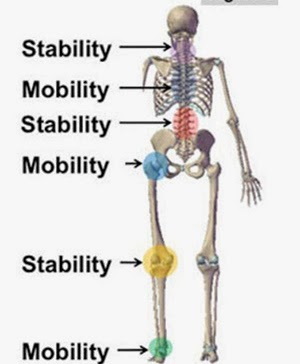
    At least that’s what I used to tell everyone, but really it’s alternating series of mobile and stable links. Life is dynamic, and we ask our bodies to move and conform to every imaginable task we set out to perform (sit, stand, crouch, squat or crawl).  There is a  new approach in manual medicine(Chiropractic and Physical Therapy) called Functional Movement Analysis is a new approach that we use to figure out why certain movements, or lack thereof, are causing the body to overuse and break down. It tells us if the areas that should be moving are moving & if the areas that are supposed to be stabilizing are stabilizing.  These patterns are universal to all of us and when disrupted or absent create undo stress to certain critical body parts.

    What’s in a test?
    Any movement can be a functional test, something as simple as watching someone rise  from a chair, squat down or jump down off of a box.  Lets consider the squat. By analyzing figure 1 the squatter on the right needs to work on the amount her upper back can bend backward (extend). She could also use some lower back stability training and ankle mobility as well. Hopefully it’s easy to imagine the squatter on the left being able to endure more squatting without injury over the squatter on the right, because that is the case.
    Figure 1 courtesy of NASM

    These female athletes were asked to drop off the box and then jump as high as they could, you can see that the athlete in figure A maintains the space between her knees while the athlete in figure B collapses. The second athlete has a much higher rate of ACL tears because of the hip weakness, she shows in this movement test. Finding and correcting that flaw may save her athletic career.

    figure 2
    figure 2

    The news is getting out.
    Several recent studies performed by orthopedist are being published supporting this theory of “the bad neighbor”. That shoulder problems and knee problems are greatly affected by related body parts, and that just treating the affected area is just sweeping the dirt under the rug. Study on how shoulder pain is connected to hip issues. As well as a great post on the influence of hip and ankle on knee pain.
    Good enough for world champs?


    These “functional” testing procedures not only allow for detection of impending injuries but we also use them as a baseline to measure future progress.  After finding these underlying problems, specific corrective exercises are prescribed to correct it. (mentioned in this post). In fact we usually see improvements in the first treatment. There are many systems of testing out there, all of them have merit and while we favor a select few, we use most of them in some form or another.  The Super Bowl winning Seattle Seahawks use this as a guide for off season training and injury prevention, and if it’s good enough for them, well you know how that goes…


    Dr. Serafim is a Rehabilitation and a Strength and Conditioning Specialist. He lives and works in the Exton PA area and has devoted himself to furthering his understanding of movement related disorders, and is level 2 functional movement screen certified. He teaches continuing education and operates a private practice. More information can be found at Kinetx.org and feel free to like us at our Facebook Page page.
  • Strength from the ground up

    Strength from the ground up

    Functional exercise
    Today we are going to dive right into the  new phenomenon of “Functional Exercise” seen in many of the gyms & exercise magazines. If you look back at my previous posts your aware of the reasons we stiffen. As adults we quickly lose mobility which robs us of moving correctly, or what we in the rehab world call “Functionally”. One of the primary purposes I began writing this blog was to explain the importance of movement. A big part of getting you moving again, without compensations that  harm you, is getting you back to your developmental roots.
    Developing our motor skills  occurs when we are infants. We first learn to roll over, then crawl, eventually we get up on one knee and ultimately we stand. As infants we have all the mobility in the world, it’s the stability that needs to be learned. In rehab we use these positions as “resets” to reestablish movement patterns that are essential to correct functional movement, and functional exercise(more on this in future posts).

    Why are we doing this again? 
    Many trainers are adding functional exercise, not understanding the reasoning  & it’s became a novelty.  Functional exercise is most effective when used to improve a deficiency.  As a Functional Movement Screen practitioner, I use the findings of the screen as the basis for prescribing the exercise. 
    This will end badly…
    When we look at one of the most fundamental movement not only in exercise but in life; the squat, this concept can be better understood..
    Whoa, slow down there tiger

    As you can see our young friend can easily sit in a deep squat while playing, while our weight lifting friend is about to get a chance to meet yours truly (after he sees every other provider without relief). The weight lifter is trying to build strength on poor movement. While he may get away with it for a short time, this strategy is sure to fail, this is the scenario I’m attempting to save you from. The functional movement that I referred to applies not only to the squat but many other exercises & activities that will be spoken about frequently in my posts.
    Baby steps
    Nobody wants to have to take a step back, but in order to “Live to Move”, we will need to go through prescribed corrective exercises to get the movement right, before we start adding resistance and accentuating our faults. The more the individual strengthens their faults, the more work there will be in reversing that process.  An example of stepping back to master the squat would be for someone to learn to hinge at the hips, build mobility in the hips ankle and upper back, followed by learning to master the glute bridge,  and  finally progress to face the wall squats.

     Putting it all together
    By taking a step back and making sure the way you move isn’t hurting you, you will create and maintain an amazing foundation to move better, feel better, work better and train better. The squat is a tremendous and fundamental movement most of us have difficulty performing.  It’s also one of the best exercises for loosing fat and adding muscle when performed correctly, and when we add functional movement it’s also one of the safest. 

    Dr. Serafim is a Rehabilitation and a Strength and Conditioning Specialist. He lives and works in the Exton PA area and has devoted himself to furthering his understanding of movement related disorders, and is level 2 functional movement screen certified. He teaches continuing education and operates a private practice. More information can be found at Kinetx.org and feel free to like us at our Facebook Page page.
  • A Body in Motion Tends to Stay in Motion

    A Body in Motion Tends to Stay in Motion

    How to save your back and knees! The Bad Neighbor; continued..

    PART III of “It’s all in the hips” 
    A Body in Motion Tends to Stay in Motion
    In the last post we discussed what can be done to lessen the effects of postural strain and the resultant muscle imbalance that is silently causing or contributing to the back and knee syndromes.  We also need ACTIVE strategies to move well.  
    The active strategies are called corrective exercises, they can be performed for just a minute (micro-break), as part of your “dynamic” warm-up, or in the cool down phase of your workout. The moment and duration you would perform these depends on individual needs, but it’s hard to overdo these. Ask your qualified health/fitness pro for clarification or call upon us for specifics. These may look familiar for those of you with a regular work out routine, however why you’re doing them may have been a mystery.
    The Leg Lowering Progression
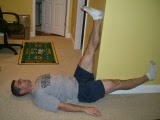
    Here’s a great exercise from Gray Cook, found in his book “Movement” (1), it promotes the amount one hip can move in relation to another. One may wonder why that’s important, until we consider some sporting activities. Start with a supported (wall or partner) straight leg raise. The athlete should be pressing hard into the floor with the hands to lock in the trunk throughout the movement. Knees should remain straight, ankles dorsiflexed, hips neutral (watch for external rotation), and trunk is rigid.

    The tall half kneel
    This position is an essential step in our rehab progressions, and it’s also a great way to strengthen with core integration, but it’s use in this discussion is to promote hip extension. Hip extension is so critical to us all, it’s especially absent in so many of my runner patients, so here’s the fix. In performing the tall half kneel, form is everything, the upside knee and the downside knee are both at 90 degrees and the posture is lengthened (thus the tall). While maintaining the tall posture lean in to the front knee. 5 second pulses with a second break will restore some much needed movement.  This courtesy of functionalmovement.com , an excellent resourse for anyone that wants to perform better.


    Tim Lincecum, a pitcher for the San Francisco Giants displays incredible hip “dissociation” which allows him to generate speed from his core, not his shoulder.


    While we’re not all MLB pitchers, the same principles that make these guys great in their movements,  help us be proficient at the activities we love also.  The opposite is also true, if we lack this movement, it’s part of the problem. Hiking, surfing, soccer, racket/club sports and many other activities rely on this essential movement to generate power from the core. 


    The Dynamic Warm up


    The latest research on warming up before your work out supports moving stretches done briskly and briefly. These new stretches are called dynamic warm ups. The general rule is 10 to 20 paces, moving in a range that is only slightly challenging. We’re not looking for the deep burn you may experience in Yoga, this gets the ligaments, tendons and joints ready for activity. The warm up you choose should mimic the target activity.

    These two activities are literally the tip of the corrective exercise iceberg, I don’t want to overwhelm you, just provide a deeper understanding of the many options that are becoming popular in the world of rehab and sports science. Contact us with any questions and consider getting some instruction on activities such as these.

    1-Cook, Gray. Movement: Functional Movement Systems ; Screening, Assessment and Corrective Strategies. Santa Cruz, Calif: On Target Publications, 2010. Print.


    Dr. Serafim is a Rehabilitation and a Strength and Conditioning Specialist. He lives and works in the Exton PA area and has devoted himself to furthering his understanding of movement related disorders, and is level 2 functional movement screen certified. He teaches continuing education and operates a private practice. More information can be found at Kinetx.org and feel free to like us at our Facebook Page page.


  • The bad neighbor..

    The bad neighbor..

    PART II of “It’s all in the hips”
    The body is a mobile object
    The body needs to move in every direction to accommodate our daily living activities, as well as any other activities we put it through. Each portion of our body contributes to the overall movement , as each instrument plays it’s part in an orchestra. The body will steal from adjacent joint to accommodate the movement. In rehab, we call this “substitution”. It’s a normal event that occurs all day every day with each of us, whether we are “in shape” or not so much. When substitution occurs, the hips refuse to move causing the lower back to move too much to accommodate it, the hips become what is essentially a “bad neighbor”.

    Everything in moderation is all right
    We all need to sit, but altering the position needs to become a priority. Substitution in excess will lead to poor biomechanics, so it’s important we do what we can to avoid letting the hips get stuck in that seated position. In my last entry we discussed hip mobility and the effects static positions have on the hips. Any body part left in the same position for too long will soon loose it’s ability to move, because of neurologic motor control principles.  An extreme example is where a joint is cast/immobilized for weeks and the patient has little to no movement when it’s finally removed.

    Ergonomics; fitting the individual to the workstation
    No two people are the same, each individual has unique needs and characteristics that must to be taken into consideration when dispensing ergonomic advice. In general terms, we can look at what ergonomic help we can get to lessen the effects of prolonged postures.

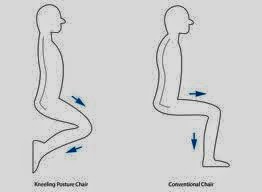
    In a kneeling chair or in a perched position (sitting at the edge of your chair) we improve not only is the hip angle, but also restore the natural and beneficial low back curve. Another beneficial effect is the glutes will “turn on” in this position, as sitting typically turns the glutes off forcing other muscles to overwork in a majority of the lower back pain syndromes.  Other chair substitutes in the past have included sitting on a physioball, however a recent study showed no improvement in posture and an increase in discomfort.(1).  As we stated earlier, changing positions has been shown to decrease physical stress and improve pain patterns.  There are some wonderful apps you can use as a reminder to take a “micro break”, 30 seconds to a minute to perform some yoga like restorative stretches. For those who are confined to a car; the seat back should be altered often to alleviate the stress being placed on the hips. 
    Get up stand up
    In a similar vein, standing work stations are now being offered for some when your doctor recommends them to your HR department. The newest of these stations are actually adjustable putting the user at an optimal position in either the standing, perched or seated position. OSHA provides these guidelines to standing work stations, in this example it’s for food handlers but it applies to any type of work. (2).  
    Next post we will be discussing active sparing strategies and corrective exercises of the hips and lower back. 

    1.Stability ball versus office chair: comparison of muscle activation and lumbar spine posture during prolonged sitting.

    Gregory DE1, Dunk NM, Callaghan JP.


    Dr. Serafim is a Rehabilitation and a Strength and Conditioning Specialist. He lives and works in the Exton PA area and has devoted himself to furthering his understanding of movement related disorders. He teaches continuing education and operates a private practice. More information can be found at Kinetx.org and feel free to like us at our facebook page.