Author: Dr. Evyeni Serafim

  • Zone, Keto, Paleo and Deflame
    Zone, Keto, Paleo and Deflame

    Comparing lower carbohydrate and Ketogenic type eating plans

    This post will explain the general process of nutrient assimilation and the various drawbacks following a “traditional food pyramid” or “my plate” diets recommended by the FDA vs. a low carbohydrate diet proposed by a multitude of researchers. While these low carb researchers have found slight variations in their diets or eating styles, there are a great many similarities found as well.

    Barry Sears’ “Enter the Zone” diet, David Seamen’s “Deflame diet”, the Ketogenic diet and of course Loren Cordain’s “Paleo” diet, all contend that lowering carbohydrate intake can alleviate medical conditions like type two diabetes, chronic inflammatory disorders, nonalcoholic fatty liver disease, hypertension, fat free mass (FFM) and coronary artery disease.

    It is my hope that you as the reader gain appreciation of how our meal choices affect our overall health, inflammatory levels, body image, satiety, energy level and even lab levels. Armed with this new information you may change your views of certain foods dramatically.

    Background; In analyzing the effects of various low carbohydrate eating plans, including but not limited to the ketogenic diet, we must first discuss metabolism. Metabolism is a chemical process in which the body receives nutrition. This assimilation of nutrients results in the delivery of macro and micro nutrients to the individual cells, so that cellular metabolism can occur. This process provides energy in the form of ATP, building blocks for muscles (amino acids),the materials needed for the framework of the body (collagen, bone minerals) as well as the walls of each individual cell (fatty acids).

    Metabolic processes; The first step in carbohydrate metabolism is glycolysis, this chemical reaction allows the body to utilize the simple sugars(glucose) or store them. The body utilizes a glucose in a variety of ways. It’s used as a primary source of energy for our movements (glycolysis, Krebs cycle and electron transport chain), and energy source for brain cell function (exclusively).

    When taken in excess, it’s combined to form glycogen (glycogenesis), during that process insulin is released and the liver later stores the glycogen in the fatty cells. Fat metabolism occurs if there’s a lack of available carbohydrates to metabolize. There are a variety of reasons this may occur; fasting, a low carbohydrate diet and untreated diseases like diabetes. The result of fat catabolism is glycerol and fatty acids, but we should keep in mind that high insulin levels inhibit fat catabolism. Nevertheless, the body synthesizes enzymes called lipases and maintains the ability to catabolize fat in the correct environment. Fat catabolism is similar to carbohydrate catabolism, energy production from fat also occurs in the mitochondria via the citric acid cycle & the electron transport chain. To break down the fatty acid chains, the body utilizes a process called beta-oxidation, which cleaves the long fatty acid chain groups and converts them to usable segments.

    Protein metabolism the least plentiful source of energy in the traditional “food pyramid”. The traditional role of protein consumption is anabolism, which is responsible for synthesizing the proteins and needed for our soft tissues. The body can produce various proteins (and amino acids), but a select few several amino acids must be consumed (essential amino acids). Therefore, but all not only is protein essential to a diet it can also serve both; as a source of energy, and a source of building blocks.

    Lower carbohydrate eating plans

    In Barry Sears Enter the Zone diet, a 40:30:30 caloric intake ratio is utilized (Carbohydrate: Fat: Protein). Dr. Sears contends that foods that have lower amounts of sugar or “lower glycemic index “foods allow for less fluctuations of insulin levels. This in turn lowers cravings as well as improving wellbeing through reduction in inflammatory responses. Like most diets, the zone diet is dependent on the individual’s metabolic requirements. BMR is the rate of caloric expenditure for an individual per day and is reliant upon the individual’s fat free mass (FFM)(Sears, 1995.). The FDA’s recommendation for protein is .38 g/lb. FFM, while Dr. Sears calls for .7 to1g/lb. This makes it a higher protein diet. The amount of fat in this plan is determined by the caloric intake, and that in turn is reliant on the BRM (Sears, 1995.). The amount of fat in this diet is also higher than FDA recommendation of 10% (Total Fat, 2018.). Dr. Sears’ work has been heavily scrutinized, and the results of his eating plan has had have been impactful on improving FFM (Ebbling, 2007.; Fontani,2005.; Skoy, 1999.) Dr. Sears also reported that his plan had positive implications regarding cholesterol and cardiovascular profile factors. The Zone diet is also been found to improve fasting glucose levels for type II diabetics(Hamdy, 2008.). As mentioned before, the mechanism in the zone diet is to limit foods to lean meats, some unsaturated fats and most importantly fibrous or low glycemic carbohydrates. The increase in protein results in a positive nitrogen balance (only protein contains nitrogen versus fat and carbohydrates) resulting in an anabolic state. The lack of carbohydrates also induces the body to metabolize the fat and protein taken in. Metabolizing fatty acids leads to a slight ketogenic state.

    The lack of insulin fluctuations is the reason someone following a Zone type system would feel satiated, as a spike in insulin has a reactive dip shortly after (Hyman, 2018) and this dip is why your body craves another meal. The brain also has a part to play in how we react to food. There is a concept involving anorexigenic responses, which are triggered by a high fat diet, and promote satiety (fullness). The hypothalamus controls these types of responses and Resveratrol (a natural polyphenol that promotes anorexigenic responses) is present in high protein eating programs (Drummen, 2018.; Safahani,2017.).

    Comparison of the various low carbohydrate plans (Keto and Paleo, 2018).

    Dr. Seamen’s DeFlame diet is another diet or eating system that calls for a reduction in starchy carbohydrates. The focus is to replace “pro-inflammatory” starchy carbohydrates with “anti-inflammatory” fibrous carbohydrates and replace trans fats with unsaturated fats. The mechanism Dr. Seamen describes is one where glucose causes a hyperglycemic state, combined with trans fats, resulting in the bacteria in the gut to release endotoxins. These endotoxins have a detrimental effect on cells causing them to release inflammatory chemicals. The end result is chronic inflammation that can cause and contribute to a variety of maladies (Seamen, 2002. ; Totsch, 2015.). The net effect of the DeFlame diet is a de-facto ketogenic state (mild compared to strict Ketogenic plans). While Dr. Seamen’s aim is to reduce inflammation, he also alters the metabolic pathways at the same time, resulting in an anabolic effect. The de flame diet also was shown to decrease fatty liver disease and type II diabetes, which has been consistent with the variety of lower carbohydrate type eating programs (Pérez-Guisado, 2011. ; Khondkaryan, 2018.; Drummen, 2018.).
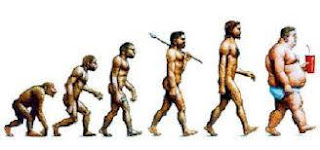
    The Paleo diet is yet another eating program that calls upon ketosis and fatty acid catabolism by harkening back to our paleolithic roots. This plan features many iterations, so a range of protein intake is available. By avoiding starchy, low glycemic index and processed food, while placing an emphasis on fibrous foods and animal products (excluding dairy), the individual can maintain a ketogenic state. The Paleo diet’s main theme is to not consume any food that wouldn’t have available to our ancestors and to “mimic the pre-agricultural time”, to when we were hunter-gatherers (Cordain, 2018.). This program has no guidelines, making it more of a philosophy than a structured program. A study conducted by Pastore et al. found that after only a 4-month trial on the Paleo diet, the subjects (who had prior hypercholesteremia) had significantly lowered total cholesterol and triglycerides, and even improved FFM (2015).

    The Ketogenic eating plan features fat metabolism more than any other program. This plan is best used for lowering the amount of insulin and is not ideal for long term usage as it has been found to raise lipoprotein content (Kwiterovich, 2003). This plan should be supervised and performed for specific medical outcomes in question (Klara, 2017.). Its lower levels of carbohydrates increase some stress hormones (cortisol) and decrease anabolic hormones like testosterone, and lower anabolism in athletes due to the lowered protein content could be an issue (Miller, 2017.). Fat loading has also been found to be inferior to carbohydrate loading for athletic endeavors as a mode of event preparation (Zajac, 2014.).
    The following chart outlines the various carb restricted eating plans and the benefits and drawbacks of each, it also outlines the macronutrient break down and the effect of some of the lab values.
    Conclusion
    While the metaphor “many roads lead to Rome” applies here, the mode of eating program you utilize does not seem to have a major bearing on your FFM, cholesterol profile (excluding Ketogenic) or satiety, so long as you adhere to the major guidelines outlined by these various authors. These programs are here as tools, allowing the individual to maintain a healthy frame, feel satiated and ensure that their lab work will be within normal limits. In making our meal selections, we are deciding what effect we are having on our bodies and lives

    KetogenicDeFlameEnter the ZonePaleo
    Macronutrient breakdownCarbs: 5-10%Fat: 60-80Protein: 20-30Can fluctuate between a Keto and PaleoCarbs: 40%Fat: 30%Protein: 30%Carbs: 10-15%Fat: 55-75%Protein: 15-30%
    KeysAvoid Carbohydrates; Burn fats in lieu of carbsAvoid processed or refined sugars, grains and trans fatAvoid high glycemic index foods, balance macro’sAvoid post agricultural period products (dairy, refined sugars, grains)
    Pro’sincreased FFM, improved satietyincreased FFM, improved satietyIncreased FFM, improved satietyIncreased FFM,Improved satiety
    ConsDecreased athletic performancenonenoneNo limitations due to no guidelines, expense
    Lab value impactLower insulin levels, Lower testosterone, increased inflammation, higher lipoproteinsLower insulin levels, decreased inflammation, lower cholesterol/heart diseaseLower insulin levels, lower inflammation, lower cholesterol/heart diseaseLower insulin levels, lower inflammation, lower cholesterol/heart disease

    Bibliography
    Cordain, Loren. “The Paleo Diet Premise |Reduce Risk of Chronic Disease | Dr. Cordain.” The Paleo Diet™, 2018, thepaleodiet.com/the-paleo-diet-premise/.
    Drummen, Mathijs, et al. “Dietary Protein and Energy Balance in Relation to Obesity and Co-Morbidities.” Frontiers in Endocrinology, vol. 9, 2018, doi:10.3389/fendo.2018.00443.
    Ebbeling, C. B., Leidig, M. M., Feldman, H. A., Lovesky, M. M., & Ludwig, D. S. (2007). Effects of a Low–Glycemic Load vs Low-Fat Diet in Obese Young Adults. Jama, 297(19), 2092. doi:10.1001/jama.297.19.2092
    Fontani, G., Corradeschi, F., Felici, A., Alfatti, F., Bugarini, R., Fiaschi, A. I., . . . Berra, B. (2005). Blood profiles, body fat and mood state in healthy subjects on different diets supplemented with Omega-3 polyunsaturated fatty acids. European Journal of Clinical Investigation, 35(8), 499-507. doi:10.1111/j.1365-2362.2005.01540.x
    Hamdy, O., & Carver, C. (2008). The why WAIT program: Improving clinical outcomes through weight management in type 2 diabetes. Current Diabetes Reports, 8(5), 413-420. doi:10.1007/s11892-008-0071-5
    Hyman, M. (2012). The blood sugar solution: The ultrahealthy program for losing weight, preventing disease, and feeling great now! New York, NY: Little, Brown and.
    Khondkaryan, L., Margaryan, S., Poghosyan, D., & Manukyan, G. (2018). Impaired Inflammatory Response to LPS in Type 2 Diabetes Mellitus. International Journal of Inflammation, 2018, 1-6. doi:10.1155/2018/2157434
    Pastore, Robert L., et al. “Paleolithic Nutrition Improves Plasma Lipid Concentrations of Hypercholesterolemic Adults to a Greater Extent than Traditional Heart-Healthy Dietary Recommendations.” Nutrition Research, vol. 35, no. 6, 2015, pp. 474–479., doi:10.1016/j.nutres.2015.05.002.
    Pérez-Guisado, J., & Muñoz-Serrano, A. (2011). The Effect of the Spanish Ketogenic Mediterranean Diet on Nonalcoholic Fatty Liver Disease: A Pilot Study. Journal of Medicinal Food, 14(7-8), 677-680. doi:10.1089/jmf.2011.0075
    Seaman, D. R. (2002). The diet-induced proinflammatory state:. Journal of Manipulative and Physiological Therapeutics, 25(3), 168-179. doi:10.1067/mmt.2002.122324
    Safahani, Maryam, et al. “Resveratrol Promotes the Arcuate Nucleus Architecture Remodeling to Produce More Anorexigenic Neurons in High-Fat-Diet–Fed Mice.” Nutrition, vol. 50, 2018, pp. 49–59., doi:10.1016/j.nut.2017.10.019.
    Sears, B., & Lawren, B. (1995). Enter the Zone. New York, NY: Regan Books.
    Skov, A., Toubro, S., Rønn, B., Holm, L., & Astrup, A. (1999). Randomized trial on protein vs carbohydrate in ad libitum fat reduced diet for the treatment of obesity. International Journal of Obesity, 23(5), 528-536. doi:10.1038/sj.ijo.0800867
    Totsch, S. K., Waite, M. E., & Sorge, R. E. (2015). Dietary Influence on Pain via the Immune System. Progress in Molecular Biology and Translational Science Molecular and Cell Biology of Pain, 435-469. doi:10.1016/bs.pmbts.2014.11.013
    Zajac, A., Poprzecki, S., Maszczyk, A., Czuba, M., Michalczyk, M., & Zydek, G. (2014). The Effects of a Ketogenic Diet on Exercise Metabolism and Physical Performance in Off-Road Cyclists. Nutrients, 6(7), 2493-2508. doi:10.3390/nu6072493

  • What’s posture got to do with it? Everything!

    What’s posture got to do with it? Everything!

    Does our posture affect what happens when we exercise?
    This is the first in a multi part series, today we will discuss the detrimental effects of postural faults in the upper body and next time we will address the lower body. In exercise as well as in normal day to day movement, there is a complex interaction between how we move and how much we move.  Most commonly how well or poorly we move is reflected in our capacity to move.  If we move well we can move a lot, and conversely if we move with altered movement patterns, it can be less efficient, detrimental and many times pathological.

    Postural faults are not your fault..well not entirely.

    One of the most common thing we see in our office is poor posture, but why?  Believe it or not, it’s the way we have evolved vs. our current environment.  Over 30,000 years of recorded history, man has been active.  Farming for vegetables, chasing or hunting for prey, it was not easy or sedentary type existence. Fast forward to the 21st century and we no longer need to hoe the field or track migratory prey over long distances. Our bodies were designed to move and perform tasks crucial to survival. Those tasks formed a balanced frame because the tasks were diverse.  Not so much anymore.. For those who want to know more about primitive patterns, how we analyze it and how we get back to healthy movement click here for a power point presentation I created for fitness professionals.


    We live in a flexion based society and most of us contribute to it in almost every aspect.. even when we weight train. 

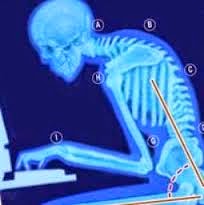
    It’s no secret that we as a society have become not only complacent but we’re also stuck in the seated position for much too long. We spend more and more time at the work desk, and even more in the car and when all that is over we go to the gym and sit in all of these Precor and Hammer strength machines some more. All of this concentrates the work that we do in the front of our bodies; overdeveloping the front half, and making it dominant.  The result is your posture collapsing forward.  In essence we are feeding the poor posture with something we are told is good for us.  Exercise is good for us, but much more so when it’s done correctly and not reinforcing postural faults.


    Don’t worry Doc, I train back day too..


    I’m ashamed to say I fell victim to this one too way back when, most think that training your lats with pulling type exercise will balance your posture, but it does not. The Latissimus doesn’t balance out the chest/pecs the middle and lower trapezius and rhomboids do. This thought process contributes to this Upper Crossed Syndrome which is widespread and an underlying factor in so many musculo-skeletal issues.

    The chest has taken over and pulled the shoulders forward


    A healthy balance or the muscles that move us forward and backwards in the upper body


    The Lats(back) has taken over and rotated the shoulders in


    Take into account the previous discussed predisposition (the front of us taking over) and we quickly see that our workouts can be contributing to a myriad of pathological processes including but not limited to;

    • Arthritis in the neck (cervical degeneration)
    • Pinched nerve in the shoulder (thoracic outlet syndrome)
    • Pinched nerve in the neck (cervical radiculitis) 
    • Tendinitis in the biceps
    • Shoulder Bursitis(sub-acromial bursitis)
    • Shoulder impingement 
    • Rotator cuff syndrome or tear
    • Upper back spasms(thoralgia)
    • Headaches

    As a matter of fact, you don’t even need to exercise for the above problems to occur if you have the rounded shoulder syndrome. This is why it’s important to have good movement patterns before starting any exercise program. If we can begin with correct fundamental movement exercises, you need to be able to perform these movements (without bad mechanics) before you start an exercise program.  These movements are;

    • Upper body push(push up, plank)
    • Upper body pull(TRX pull up, pull up)
    • Squat
    • Hip hinge or Deadlift
    • Lunge
    • Twist (rotation or anti-rotation)
    Many feel like these exercises are too hard, or they have bad knees etc., but the truth is that a good fitness professional knows how to scale these exercises to make them possible for everyone. I wrote a terrific post about exercises that incorporate may of these movements here.

    Balance; the key to so many things

    You’re not pulling this off without some good shoulder stabilizers


    The head needs to be balance on top of the shoulders or the muscles that support it will become tight, it’s like balancing a 10 lb bowling ball on top of the body. If you don’t have the right leverage it gets ugly..FAST  The same holds true for the shoulder, the shoulder blade provides platform of the shoulder.  If that base cannot hold it’s stability it’s difficult and dangerous to try and lift objects without overwhelming the stabilizing muscles. It’s those instances where you start to see the rotator cuff tears AC joint separations and bursitis.
    You want the gym? You can’t handle the gym!

    For as big as the fitness industry is, there is very little cohesion and even less standardization.  There are commonly competing ideologies and ideals (crossfit vs. NSCA), and there is no central authoritarian agency, no standards of progressing .  The truth is that we learned or were taught these fundamental movements in our youth(primitive patterns), however we may not of mastered them or we have forgotten them.  In fitness there is very little “vetting”. We go out and perform exercises because the trainer said so or we see everyone else doing them, seldom asking why?  The truth is that there is a process that you need to follow that will dramatically increase the chances of a successful exercise routine.  You need to be able to pass movements benchmarks before graduating to the next level. After all, your routine is worthless if you are too injured to perform it and studies show that most exercise enthusiast will not return following a major injury. Tune in next time when we discuss the lower body imbalances and the pitfalls associated with them before we start on what needs to be done to prevent these types of problems.
    Today we provided principles, so you can adapt your own protocols, don’t hesitate to contact us with questions. 
    Please let us know you visited our blog by liking, commenting & sharing.
     
    Dr. Serafim is a Rehabilitation and a Strength and Conditioning Specialist. He lives and works in the Exton PA area and has devoted himself to furthering his understanding of movement related disorders. He teaches continuing education and operates a private practice. More information can be found at Kinetx.org and feel free to like us at our facebook page.
  • Keys to recovery; don’t let soreness hold up the next workout!  Part 2; Recovery workouts and techniques.

    Keys to recovery; don’t let soreness hold up the next workout! Part 2; Recovery workouts and techniques.

    Part II of the Consistency series
    You will never be successful in your workout if you cannot stay consistent and manage soreness and injury..
    As discussed in part one found here, the amount of success reaching your fitness goals means making sure you can string together enough workouts. As we said in our last post; consistency is key!!! 

    There are many things that can get in the way of a consistent routine.  For those new to my blog, I use sports science to prevent the number one way of loosing your consistency.. Injury!  But injury alone does not hinder our progress.  Travel, work obligations, family obligations and delayed onset muscle soreness(DOMS) from the previous workout all conspire against results.

    Finding exercises that fit your time and lifestyle (discussed in this post) can take care of the when and where. Preventing injuries can really get your routine on a roll(discussed hereherehere and here,), but will you be giving that next workout your best?  
    The Commandments of weight training;
    For success in any workout program it has to adhere to the principles of training: specificity, overload, rest, adaptation and reversibility. These are the basics “commandments” of exercise, and for your next workout to really be effective, the second “commandment”: overload must be adhered to (really all of them do).  Today we will cover overload and rest. Specificity should be prescribed by your fitness pro, and it should be derived from a needs analysis. 
    Reversibility is the process in which you loose your gains (rate of 1/3 you gained them).


    Overload: Human’s can’t register a 10% difference


    You can progress your workout or “overload” it a number of different ways, slight changes are sure fire ways of “upping the ante”.
    1. Increase the working weight,
    2. Increase the repetitions,
    3. Increase the time under tension, 
    4. Increase the number of sets  
    5. Increase the intensity(decrease rest time)

    You’re either moving towards me or away from me. 

    As you can see, there needs to be a progression to really force adaptations to training and ultimately progress in to a stronger, leaner and better athlete. It’s widely known that if your sets, reps, weights are decreasing you are most likely over-training. The amount of overload will be largely dependent on how recovered you feel. The take home message is that; if you are not progressing you are regressing!  So lets get to what has been proven and what has been reported by athletes to help. 
    Rest: 
    Rest speaks to recovering, the more you do to recover, the less rest you need. The following factors will speed up the process and lessen the chance of injury overall.
    Active Recovery
    This concept is basically about getting the blood pumping to the body and the sore muscle groups in question. What the research is showing is that it’s better to perform a light, low intensity workout as opposed to just completely resting.  One study documented the lactate clearance was improved when performing related activity either after an event or in between sets. The intensity was at 30 % the original(1).  Another study noted that adding the active recovery also improved psychological recovery by adding relaxation(2). A third study showed a decrease in overall lactate levels in athletes who added recovery workouts and massage on rest days(3).  Excellent examples of Active recovery workouts on rest days include but are not limited to:

    • light kettle bell work (swings, halo’s, dead-lifts, windmills)
    • Battle ropes
    • Jump rope
    • Cardio (rowing, treadmill, walking, elliptical)


    Stretching

    This one would seem to be a slam dunk right? Stretch a sore muscle. Yet much of the available research tells us the contrary is true. There is little benefit to stretching to relieve muscle soreness.  Which makes the next subject a bit more confusing(4,5,6).  Please do not completely abandon stretching, it’s still has some merits!
    Yoga
    Many automatically infer that Yoga is about stretching, when in reality, there is a strong body stabilizing/strengthening effect, an affect on breathing/oxygenation as well as a calming effect. Another reason it would seem beneficial is that it’s a low load long duration activity, much like our active recovery. If recovery workouts are beneficial, then adding extra oxygen to metabolize lactate and increasing circulation are the way to go(7).

    Massage
    This modality has been around and has obvious benefits, while there is plenty of studies, it’s been used and commented on so many times, that there’s no need to expand much further(8). Many athletes come in to our office on a maintenence basis to make sure they are at peak performance.  Athletes all the way up to the professional level do the same. 
    Common Sense
    Some exercise enthusiast may be a little too aggressive when starting a program, if you soreness lasts more that 7 days, consult your doctor(not your exercise professional).  In cases of excessively long periods of soreness consider a more gradual increase in any of the “overload” factors. The body cannot register a difference of 10%, so that is always a good starting point. Remember the greatest ability is AVAIL-ABILITY, you aren’t getting stronger if you can’t get off the couch. 
      
    We will cover some of the other principles in a third installment of Key’s to recovery.


    The take home message is that the traditional approaches many take just don’t work. Research shows that light activity in between sets and workout are the best way to make sure your moving to live and living to move!
    Today we provided principles, so you can adapt your own protocols, don’t hesitate to contact us with questions. 
    Please let us know you visited our blog by liking, commenting & sharing.

    Dr. Serafim is a Rehabilitation and a Strength and Conditioning Specialist. He lives and works in the Exton PA area and has devoted himself to furthering his understanding of movement related disorders. He teaches continuing education and operates a private practice. More information can be found at Kinetx.org and feel free to like us at our facebook page.

    (1) Effects of active recovery on plasma lactate and anaerobic power following repeated intensive exercise. Ahmaidi S, Granier P, Taoutaou Z, Mercier J, Dubouchaud H, Prefaut C. Medicine & Science in Sports & Exercise. 1996 Apr;28(4):450-6. PMID: 8778550

    (2) Effect of incorporating low intensity exercise into the recovery period after a rugby match. M Suzuki, T Umeda, S Nakaji, T Shimoyama, T Mashiko, and K Sugawara, British Journal of Sports Medicine, 2004 38: 436-440.

    (3) Blood Lactate Removal Using Combined Massage and Active Recovery. Micklewright, D P. 1; Beneke, R FACSM 1; Gladwell, V 1; Sellens, M H. Medicine & Science in Sports & Exercise. 35(5) Supplement 1:S317, May 2003.
    (4) Lund, H., Vestergaard-Poulsen, P., Kanstrup, I., & Sejrsen, P. (1998). The effect of passive stretchng on delayed onset muscle soreness , and other detrimental effects following eccentric exercise. Scandinavian Journal of Medicine & Science in Sports8, 216–221.
    (5) Herbert, R., de Noronha, M., & Kamper, S. (2011). Stretching to prevent or reduce muscle soreness after exercise. Cochrane Database of Systematic Reviews, Issue 7, CD004577. doi:10.1002/14651858.CD004577.pub3
    (6) Cheung, K., Hume, P., & Maxwell, L. (2003). Delayed onset muscle soreness: treatment strategies and performance factors. Sports Medicine33(2), 145–164.
    (7)Boyle, C., Sayers, S., Jensen, B., Headley, S., & Manos, T. (2004). The effects of yoga training and a single bout of yoga on delayed onset muscle soreness in the lower extremity. The Journal of Strength & Conditioning Research18(4), 723–729.
    (8)Training, Journal Of Athletic. Www.journalofathletictraining.org Effects of Massage on Delayed-Onset Muscle Soreness, Swelling, and Recovery of Muscle Function (n.d.): n. pag. Web.
  • Untitled Post

    Untitled Post

    Part III of the Consistency series

    What you’re missing: The Commandments of exercise.
    Essential advice for putting together a successful workout program and smashing through the plateaus when your workout becomes stagnant.

    It sure looks like cross-fit in some ways

    In parts one and two we covered some of the issues that can interfere with consistency as well as went over the “Commandments of training”.  In this final installment we will finish talking about the essential concepts of exercise so you can train smart and “MOVE TO LIVE & LIVE TO MOVE”

    In review the basic tenets are  overload, restadaptation, specificity and reversibility.  We covered the first two last time so lets get to the rest.

    Specificity: You reap what you sow

    Anyone want to guess what Micheal Johnson’s adaptations were?


    If you sprint, you develop big quads.  If you work with your hands, you develop big forearms.  Humans are adaptable creatures, almost everything we are exposed to eventually we adapt to. Whether it’s a hot bath or a loud room at a party or concert, what your initially exposed to eventually becomes “background noise”.  Fitness training is no different, it shapes and molds each one of us (activity dependent), and if done enough, it becomes a bit routine. The S.A.I.D. principle (a common rehab/fitness concept) states exactly that, we specifically adapt to the imposed demands placed upon us; it’s the reason the stone masons forearms are so big and strong or the Kenyan marathoner who seems built for what he does.  In fact the Kenyan IS built for what he does, and is the work of many generations and demands imposed.  These individuals commonly have crossed large desert distances for generations and have become efficient at doing so.
    Here’s a thought;  If this is true, why do we train our high school pitchers in the weight room? We’re training them to be slow and plodding, a pitcher’s biggest need is speed!  

    The perfect marathon machine crafted over generations

    Adaptation: It goes both ways…
    The body’s ability to learn, adapt and improve allows us greater ability, but it also causes our progress to plateau.  Doing the same exercise or activity week in week numbs the physiologic response that is responsible for muscle growth, hormonal adaptations and the enzymatic changes that gives us better endurance (better 02 delivery, improved energy systems).  If it ain’t broke don’t fix it does not apply in regards to adaptation, while it makes things easier for us, it also makes us comfortable.  In fitness we need to be challenged and constantly pushed.

    The point of diminishing returns..
    When your’re a regular at the gym you see the same people doing the same thing, day in and day out.  Many look the same the always do (and still not at their ideal).  Why isn’t their hard work paying off with success?  It’s a fact of sports science that if you have been doing a certain type of training for long enough, that you are losing out on gains in strength and weight loss.  I’m a personal example of this, and when I became informed and changed my ways, I was rewarded with less injuries, a leaner physique and a stronger body. I now try and share that knowledge, check out some of these great techniques with a trainer that knows WHY and HOW to do it properly. 
    Shocking the system.. it’s called Periodization
    The process of changing what you do every few months is called periodization, professional athletes do it,  so you should most likely be doing it as well. There are many different reasons to change up what you are doing. It cuts down on injuries by giving some of you body parts and tissues a rest.  In professional sports it’s broken down in to seasons;
    Preseason– sports specific skills training, improve cardio vascular endurance
    In-season-maintenance of strength, manage injuries, light cardio 
    Postseason/Off-season-add muscle mass, increase speed, manage injuries
    Each period has specific goals and is geared to addressing what may have developed in the period before. While most, if any of us are not professional athletes, they are the gold standard that should be followed.  This set-up can be adapted to any type of athlete or exercise enthusiast.
    We can adapt the season analogy defining what the pro’s want to accomplish in each period and relate it to someone who wants a great physique. 
    Diet down-Getting ready for your Activity or season(bathing suit weather)
    Maintain-Keep the weight off while still enjoying life(bike, kayak,watersports)
    Get strong-take advantage of additional calories of the holidays to increase muscle mass
    Get fast– begin to shed extra weight and improve cardio vascular system

    Reversibility: Fear not!
    The concept of reversibility is one we can all sympathize with, it’s the idea that our gains made through exercise are lost at a rate of 3:1.  In other words If we worked out for one month it would take our body three months to loose or “forget” the benefits that came with said exercise program.  But like adaptation, it goes both ways!  The concept also states that the de-trained athlete will quickly recover the lost gains due to inactivity vs. someone who was completely uninitiated.  So, while it’s true that if you don’t use it you loose it, it’s also true that after you loose it it’s easier to get it back compared to someone who never had it to start.  To avoid reversal of gains simply perform one set to complete fatigue of each body part once a week!

    To summarize this series, here are some do’s and don’ts;
    Do Increase you weight, reps, time or sets 10% consistently
    Do Get your vitamins from whole foods and stay hydrated
    Don’t Drink alcohol if you’re trying to get in  better shape
    Do address post muscle workout soreness with active recovery techniques
    Don’t get stuck doing the same routine for longer than 4 months
    Do exercise the target muscle to fatigue
    Don’t completely stop, if need be maintain with one set a week
    Do train in a specific manner if you are an athlete with specific needs (i.e. baseball pitcher)
    Don’t just sit there, I just gave you the road map, now get out there and Live to move and move to live!


     Today we provided principles, so you can adapt your own protocols, don’t hesitate to contact us with questions. 

    Please let us know you visited our blog by liking, commenting & sharing.

    Dr. Serafim is a Rehabilitation and a Strength and Conditioning Specialist. He lives and works in the Exton PA area and has devoted himself to furthering his understanding of movement related disorders. He teaches continuing education and operates a private practice. More information can be found at Kinetx.org and feel free to like us at our facebook page.


  • Untitled Post

    Untitled Post

    Get the best of the past and the future with these intense full body blasting tools

    In today’s world  everything old is new again-retro fashion, paleo diets and now fitness. To help understand why some of these exercise techniques may be right for you, it’s best to examine what and who they can benefit.
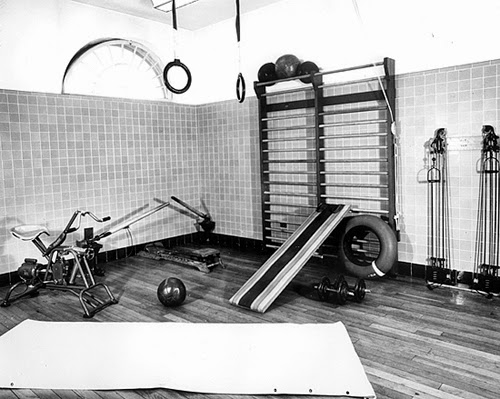
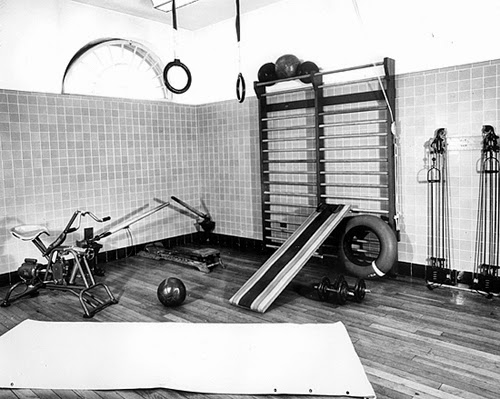
    Each system has its roots in the fitness industry evolution, most are combinations of several systems. It seems some of the conventional wisdom we heard when we were young like “sit up straight” or “eat your vegetables” were actually time proven wisdom. Here’s a picture of President Truman’s gym; note the rings, medicine balls and gym mat. This was state of art at the time, but let’s look at the rings and what that has come of it since then.
    The following exercises will get you ready for a traditional gym based routine, they will also make you better at the fundamental movements.  Those movements make you better at the things you need to do on a day in day out basis.

    Simplicity..

    TRX

    Suspension training is nothing new, high school gymnasiums included climbing ropes and rings in simpler times. TRX is a regressed form of gymnastic training.  Bodyweight training is always functional (click here to learn more about functional training), since you have to control the weight you’re using which trains your stabilizer muscles, allowing to avoid overuse and ballistic injuries. TRX also allows for some great stretching activities. Homefit.com does a great job putting together just a few of the stretching activities that can be performed.

    Who’s it good for? Suspension training is excellent for the beginner who cannot handle their full bodyweight in compound movements like the squat, push up and pull up.  As you get stronger (which should occur in the first 9-12 weeks) you continue to progress your training by moving foot or hand position into a more weight bearing position. TRX coerces  you to brace your core promoting “stiffness” and forces you to integrate your core in your basic movements.  
    Low back pain patients would greatly benefit from this type of program after rehab that would include addressing  mobility and pain issues. This work out is a great example of a local muscle endurance “military” type work out. It builds capacity, allowing you to work harder for longer.  It’s a great segue to a hypertrophy “bodybuilding” workout, since you should be able to perform compound movements correctly before you start adding weight to your moves.

    TRX, the ultimate “road warrior” getting in shape and staying in shape takes consistency(read more about it here).  TRX is light  weights and supremely portable for the home gym or busy traveling professional. It comes with a door anchor that can be used virtually anywhere. 
    Medicine and Smash Balls
    We have been working with balls ever since cave man threw his first boulder at a saber tooth. Medicine ball training started with Persian wrestlers and later with ancient Greek healers. They got the name “medicine” balls because they served as functional correctives for people with injuries and sickness.  The point with tossing or smashing activities are to use your legs and core to develop the power in the toss.  Too many times athletes striking motion, be it kicking or throwing, are DETACHED from their core. This dynamic causes a “leak” in energy in the athletes kinetic chain (movement chain). An excellent example was mentioned in this post that mentioned MLB pro. pitcher Tim Lincecum
    Who is it good for? Everyone could benefit from Medicine/Smash balls but high school, college and pro athletes have the most to gain. They can provide a local muscle endurance(military training) type work out or a plyometric type workout. Both types could be used for recovery, endurance or calorie burning. 
    Working with balls you can enhance several different movement planes of the muscular system
    One of the high level trainers I look up to Todd Durkin,  is training Darren Sproles here with smash balls in the diagonal plane lift.  Drew Brees is working out of the triple flexion position in the background.  Todd works with MLB pitchers and NFL athletes, he rarely trains just one movement plane,  and is one of the best trainers anywhere. 

    Floor gliders have infinite variation
    Floor Gliders/Ab Wheels
    Ab wheels have been around for many years, they provide excellent core activation, and tie the core into pectoral and deltoid movements.  They also target some of our accessory stabilizers and promote functional stability. There’s upper and lower limb variations such as this “mountain climber” variant.  This type of exercise it great to work in to a rehab protocol or a high intensity interval workout. From shoulder syndromes to weak lower back/cores, these simple yet effective tools are much harder than you would imagine.  The also burn a TON of calories given their nature( whole body activation).  
    Core Flyte just released their V2 glider/stability trainer and they also have a variety of exercise routines on their website at everlast.com.  Here is a split squat with the trailing foot on V2 glider.
    Who’s it good for?  Again, everyone would benefit from some linkage from core to extremities.  These are also compact and light weight so the travelling athlete could make really great use of them for maintenance.  They can promote both scapular(shoulder blade) and lumbar(low back) stability, just where you need it the most!
    By mixing in some of these tools your body will be stronger, more resilient and more stable.  The more you repeat your routine the less successful it will be.  Tune in next time when we discuss programming your exercise routing like the Pro’s. 
     Today we provided principles, so you can adapt your own protocols, don’t hesitate to contact us with questions. 

    Please let us know you visited our blog by liking, commenting & sharing.

    Dr. Serafim is a Rehabilitation and a Strength and Conditioning Specialist. He lives and works in the Exton PA area and has devoted himself to furthering his understanding of movement related disorders. He teaches continuing education and operates a private practice. More information can be found at Kinetx.org and feel free to like us at our facebook page.


  • More Sports Science; Techniques to train post injury and the importance of full body stiffness, (that’s right stiffness).

    More Sports Science; Techniques to train post injury and the importance of full body stiffness, (that’s right stiffness).

    By Dr. E Serafim
      
    I don’t want to train you; I want you to train better, so listen up.   

    Are you looking for a quicker, more challenging routine but less Weight? Or, perhaps you were injured enough to limit you but not keep you from working out?  Today’s post features different workout techniques that lets get more done with what you have, using less weight. It incorporates some isometrics and some isotonic(no movement) exercises. This style of workout is great for changing things up (i.e. Sports periodization),  works best for those with shoulder
    or back problems, anyone with endurance issues, workers with physical
    labor requirements in their jobs and athletes who have plateaued.
    Even if you’re injured you can still look like Superman by adding the
    concept of irradation (when a contraction begins in one spot &
    begins to radiate throughout the area.)


    So if you’re injured but still want to continue some exercises? Consider adding the concepts of irradiation, stiffness and rooting!

    The front (anterior) chain is dominating here, there’s a very high probability of shoulder and neck issues when this individual tries to start a program.


    Coming back from injury? Consider this; move less, work more!
     

    Imbalance of muscle groups and movement chains commonly leads to injury. Understanding
    how our muscles are situated(and work against each other) helps us appreciate the importance of
    balance. Here’s where we turn our attention to those who are feeling
    the effects of overuse or are finished with a supervised rehab
    program (but haven’t fully recovered from their injury).  In this installment we’re going to look at some ways to use less weight but actually work very hard by carrying and pressing, but first we need understand some concepts. 

    Exercise working the frontal plane


    Exercise working the Sagittal plane   


    Planes & Chains


    Understanding how muscles work together and against each other is essential when considering the contributing factors to injuries and overuse. Movement occurs in 3 planes, and when considering any program it’s important that these chains of muscle are  balanced for so many different reasons. When the individual “loads”(adds weight or reps) imbalanced patterns, injuries occur.  It’s like working out hard and fast with really bad form; it’s just an injury waiting to happen. 
    We discussed these dynamics in previous posts here  and here.  Kinetic chains are the muscles situated along the different sides of the body(anterior, posterior and 
    lateral/rotational). Having a  balanced frame will allow you to work harder, longer and safer in not only your exercise but also in your daily living activities.  Many of the workouts I see only consider one plane; forward to backward (sagittal), so it’s no surprise why the rate of injury for those who work out is prevalent. Also consider that a large percentage of those who get injured do not return to their exercise routine. 

    Muscles working together for a full body contraction;  
    My Blogs are all about movement & how
    the body synchronizes movement to help out adjacent parts.
    Irradiation is an essential rehab & performance concept. As the
    body works harder the muscles along the same kinetic chain contract
    together. A perfect example of irradiation would be lifting up a
    heavy suitcase.  The lift begins with a hand grip, then the contraction spreads to the arm,  shoulder, then to the core and entire body.  Our muscles do not act alone; but moreso are part of a symphony, all performing together.

    By activating more muscles we benefit
    from all of the physiologic effects of resistance training on a
    larger scale. This leads to more muscle growth, more calories burned
    & shorter intervals until you’ve exhausted the target
    group—workout complete! Pavel Tsatsouline frequently discusses irradiation and Professor Stuart McGill developed the concept or abdominal bracing and  the  his concept “Super Stiffness”. 
    A Radiating Muscle Contraction


    Bottoms Up!  

    By holding a weight on it’s end or using a Russian Kettle-bell we can accomplish this very beneficial whole body contraction. The Kettle-bell carry is a common exercise in Kettle-bell training.  Typically carries are performed with a walk, if you have a a painful joint, as long as walking is okay, this exercise can still provide a challenge. It can be performed stationary(isometrically) or as part of a movement pattern(isotonically).  Some of these moves I’ve
    developed & others have been around since Pavel created the
    kettle bell workout. The main point is as long as you understand the
    concepts you can add your own movements. The idea behind irradiated
    contractions is to squeeze the weight like you want to crush it.
    Here’s some bottoms up basics for irradiated tension & stiffness.


    The Racked Position; 


    This
    is the basic starting position for any carry or press position-being
    a position of strength it should serve as the starting & ending
    point.


    Elbow:
    locked into your body (imagine holding a
    piece of fabric between your arm & armpit-or have someone tuck
    one in & try to remove it against your resistance)


    Forearm:
    perpendicular
    to the ground


    Wrist:
    neutral


    Once
    you can perform this position you’re ready to turn the weight upside
    down.


    Pavel demonstrating the correct racked position. Note the contracted abdomen, neutral wrist, perpendicular forearm  and the need for some new shorts.

    Anterior Chain Exercises; 
    Now that we have the basics we can load our correct patterns. Keep in mind I’m using stiffness as well as a very hard grip to help create the full body stiffness. Form is absolutely everything with exercise so use a mirror or have a qualified exercise/movement pro supervise you until you got the hang of it. Perform 2-3 sets per chain, 6-8 reps per exercise, for the carries, walk with the weight for at least 15 seconds up to a minute.  Most importantly keep in mind NO BAD REPS!


    The double bottoms up carry
    Overhead double bottoms up carry

    Bottoms up overhead deep squat(a) with rooting of the feet.


    Bottoms up overhead deep squat(b)
    Bottoms up push up (a)


    Bottoms up push up(b)


    The un-horned Goblet squat
    The Lateral/Rotational Chain Exercises;

     Carries are excellent for resetting the shoulder blade which essential for correct shoulder function, they’re also a whole body exercise.

    The asymmetric bottoms up carry


    Overhead asymmetric bottoms up carry

    Bottoms up arm bar (a)


    The arm bar is an excellent choice for those who sit all day
    Bottoms up arm bar (b)
    Bottoms up windmill (a)


    Bottoms up windmill (b)The Posterior Chain Exercises;
    These exercises are predominantly lower body exercises and are excellent for runners, bodybuilders as well as anyone who sits for long periods. Many of these exercises have already been popularized by the RKC and Strong First.

    The Bottoms up Romanian Dead lift (a)


    The Bottoms up Romanian Dead lift (b)


    Full body contractions through irradiation are common;

    In Yoga;  

    The Yoga People Had it Right…The benefit we get by gripping hard with our hands is applicable to the feet. The Yoga concept of “rooting”  improves stability, power & arch support. Incorporating this concept in your workout can be done through barefoot training (which is the only training I do).  It’s a great way to get the most out of rooting, stiffness & irradiation. Dragon Door.com does a nice job of explaining rooting-the basic premise is to screw your feet into the floor or try to split the floor between your feet. Bringing awareness to your balance.


    In physical medicine rehab,  
    A Good Stiffness; The Abdominal Brace
    Mastering the abdominal brace is the latest and most proven method stabilizing your core and protecting your spine. This technique will improve your power and increase the amount of work done (reaping more stength training benefits). The easiest cue to help someone understand is to have them bare down like they were going #2. Other ways is to have them stiffen like they were a statue and push against random body parts. Consult with your movement specialist or qualified trainer to ensure you have mastered this before using it, fitness professionals can learn more here. I can assist if you want to reach out.
    The following exercise will provide new challenges & activate muscles that will stabilize both joints & core muscles. You don’t need fancy equipment to do these exercises; kettlebells are perfect or as a second choice a dumbbell held on its long side will also work for the concept of Irradiation.


     Today we provided principles, so you can adapt your own protocols, don’t hesitate to contact us with questions. Please like or comment if you stop by, so many have told me they enjoyed my blog, but there’s no way for me to know without posting, sharing or liking.


    Dr. Serafim is a Rehabilitation and a Strength and Conditioning
    Specialist. He lives and works in the Exton PA area and has devoted
    himself to furthering his understanding of movement related disorders.
    He teaches continuing education and operates a private practice. More
    information can be found at Kinetx.org and feel free to like us at 
    our facebook page.
  • Keys to recovering so you have a successful next workout.. sooner. Part 1; Feeding the machine

    Keys to recovering so you have a successful next workout.. sooner. Part 1; Feeding the machine

    Part I of the Consistency series
    Consistency is key in all matters!

    In all matters of life and success the key is always being consistent.  The same holds true in exercise and fitness, but what are our limiting factors when working out?  Certainly time and family obligations can get in the way but many times it’s the soreness or lack of recovery (of the previous workout) that prevents us from getting to that next workout. This two part post will address what sports science has to offer to allow you to reach your goals faster, by knowing what the professionals know. 
    When Soreness Attacks..


    Post workout muscle soreness is nothing new to anyone who has exercised. It’s universal- no matter what type of workout you do; running, local muscle endurance(push up’s etc), hypertrophy (body building) or power(Olympic lifts). Its usually and indicator that you’ve accomplished what you set out to do, whether it was to get faster, gain endurance or achieve a better physique.

    Why Am I So Sore?
    Post workout soreness occurs from several elements, lactic acid is usually the main culprit. Lactic Acid causes cramping  & is a normal byproduct of muscle metabolism. Lactate clearance is one of the things your body gets better at as you work out more and more(known as a hormonal adaptation). By understanding whats causing your soreness you are better equipped to deal with it.
    Know Thy Enemy..
    The production of lactic acid is balanced by your body’s ability to clear it out, when this process falls behind, the lactate begins to build up faster than it can be cleared. There are ways to speed up this process and providing your body with what it needs certainly is a great start.
    Feed The Machine!   (water it too!)
    In an earlier post we discussed how far in advance calories and hydration were required to be available for your workout (click here for that post). The truth is that you have to consider what you’re eating as well as when you’re eating it. Foods rich in B complexes are essential to keeping the energy synthesis moving, and avoiding falling behind with the lactic acid buildup. B1, B2, B6, B12, Folate and Niacin are all needed for the process to work. Getting these vitamins from foods as opposed to pills (Marco-nutrients are superior to Micro-nutrients) also makes a difference. 
    Thinking Big (Macro)
    Your body can digest vitamins from food quicker and easier than from pills so here’s what you need to know;
    Thiamin(B1) needed to metabolize carbohydrates

    Riboflavin(B2) involved in carbohydrate metabolism

    Niacin (B3) involved in protein metabolism


    Pyridoxine (B6) Runners should be sure to stock up on these foods as hemoglobin(carries O2) is synthesized from B6, needed for protein metabolism


    Folate (B9)


    B12 this is a big one!! Needed in Fat, Carb and Protein metabolism, can have serious consequences if missing. If your low on energy, there’s a chance you may have a B12 deficiency. Also keep in mind you need B6 to absorb B12, so being deficient in one leads to a deficiency in another!!!

    Lay Off the Sauce
    How do you feel after a night out on the town? Usually run down and tired, correct? The enzyme we use to metabolize alcohol robs us of the ability to create energy (from Fat, Protein and Carbs). Niacin is the first and greatest vitamin to be affected so if you’re going to drink, make sure to boost your B complex and specifically Niacin. Also consider the effect alcohol has on hydration and you can see the double whammy effect drinking has on not only recovering from your last workout, but getting ready for your next one. 

    The takeaway message is get plenty of whole foods, lean meats, fish and poultry, and limit alcohol consumption after or before a workout to ensure peak performance.

    Today we provided principles, so you can adapt your own protocols, don’t hesitate to contact us with questions. 

    Please let us know you visited our blog by liking, commenting & sharing.

    Dr. Serafim is a Rehabilitation and a Strength and Conditioning Specialist. He lives and works in the Exton PA area and has devoted himself to furthering his understanding of movement related disorders. He teaches continuing education and operates a private practice. More information can be found at Kinetx.org and feel free to like us at our facebook page.


  • Untitled Post

    Untitled Post

    If I told you your back could be strong for a lifetime by just using just one technique..
    The not so secret truth about sparing your back using the concept of a  neutral spine. 


    It’s a universally agreed upon notion..
    You have always heard “lift with your legs and not with your back”, but what does that really mean?  When it’s discussed here in our office, a common excuse not to, is that “my knees are too bad to squat and lift”. But as you will find the squat lift is not the only way to protect your back.  There is a common theme in exercise and rehabilitation, it’s the ability to move at the hips without moving at the back. This dynamic protects the back and allows the force to be carried where it designed to…The hips.

    The basic athletic stance

    The dead lift

    The Yoga half standing forward bend
    Drum-roll please!
    This one secret  movement is called the Hip hinge. Iit can and should be used in all phases of life, and is essential in day to day lifting or leaning over a counter. When applied to exercise; it is the basic athletic position that all athletes get ready to play from, from heavy olympic lifting (Crossfit), to the Half standing forward bend in Yoga.  It’s an essential piece of mobility that comes from the hips. It allows us to move from where we are designed to move as explained in my previous blog hereand here, and finally here. 
    Is the force with you or against you?

    Our lower backs can handle some movement, but when you add weight to those movements or repetitions (working out or manual labor) you start to add deleterious forces(shearing vs. compressive) to the spine.  While the spine can handle a large amount of compressive forces, even small amounts of shearing forces can damage discs, facet joints and strain muscles.  Keeping in mind the fact that low back pain is an epidemic in this country it’s easy to understand how common poor mechanics are. Professor McGill at the University of Waterloo likens the lumbar spine to a wire hanger, you can only bend it so many times before it breaks.
    The spine can support hundreds of pounds of compressive force
    Mastering the Hinge
    There is usually a certain technique that works for each individual when training the hip hinge.  Some pick it up very quickly, while others struggle.  The following are some really simple approaches for moving the right way, moving in a way that ensures you’ll be “living to move”!
    The Waiter’s bow
    Place your index fingers stacked where you feel the top of the pelvis.  While sticking you buttocks out, try and bring your chest to the ground. You will definitely feel a hamstring stretch. A verbal cue we have had success with is reach for the back wall with the bones you sit on. This is a intuitive way to learn how to hinge, remember everyone’s capacity to perform this will vary. If you find there is very little movement before the fingers separate, patience will be required. 
    The take home message here is, if the fingers separate, that repetition should stop at that point

    The Face the wall mini squat
    This move is great for training a proper squat, with weight bearing through the heels of the feet, but the hinge is a integral part of the beginning of the squat so using a shorter range does a excellent job of programming this movement with out any external cues.
    Hinge with dowel assist
    Using a dowel(broomstick or pvc pipe) is another great way to learn to move from the hips while keeping the lower back stable(which is, what it’s designed for).  To perform, take the dowel and put it behind you. The contact points are the base of your skull and the middle of your tailbone.  The most important aspect of this activity is to maintain contacts at all points.  It’s less important how low you can go, that part will come with posterior chain mobility and time. 

    The Hinge in day to day activities. 
    The Golfer’s lift
    Now that we know how to hinge, we can apply it to some daily activities that may cause injuries.  Using a one legged hinge to pick smaller objects is a great idea, the lower back isn’t really designed to bend over and over, so any time we can avoid bending we should. You will note the strait spine in this picture. Using support makes it even safer if balance is an issue, the good news is that you will also get a balance component out of lifting off the ground like this. 
    Standing Hamstring stretch
    We can get a great stretch through the hamstring and calf by hip hinging, this is one of the top recommended posterior chain stretch that I recommend.  Note how flat the back is, this subject leads through the chest to get the desired stretch on the upside leg. This can also be performed with the heel on the floor.
    Toes up, heels down

    The stiff legged deadlift(around the house)
    Lifting mechanics are the same all around, whether it’s a 300lb barbell or a laundry basket. The less we wear out our spines the longer they will serve us, and the more active you can be.  Again note the flat (1) back posture compared to the rounded back (2). 

    Conclusion; With a little bit of awareness and some time invested, you can spare you and your lower back a lifetime of heartache.  All of these techniques are prerequisites for the best type of exercise…The functional type that makes you stronger, more durable and lean.  If you need help with any of these concepts or exercises, feel free to reach out or stop by!!


     Today we provided principles, so you can adapt your own protocols, don’t hesitate to contact us with questions. 

    Please let us know you visited our blog by liking, commenting & sharing.


    Dr. Serafim is a Rehabilitation and a Strength and Conditioning Specialist. He lives and works in the Exton PA area and has devoted himself to furthering his understanding of movement related disorders. He teaches continuing education and operates a private practice. More information can be found at Kinetx.org and feel free to like us at our facebook page.


  • Untitled Post

    Untitled Post

    Time saving techniques for getting strong, fit and awesome.


    In today’s busy lifestyle, we tend to get caught up with our day to day duties & forget to take care of ourselves.  I frequently have patients report an inability to come in to get relief from their ailments, when we do catch up we find that one of the reasons their condition has not improved is they have not found time to do their “self care” exercises and their condition has degraded.  The purpose for the self care exercises is to allow them to continue improving on their own-when there’s no time for even that, you know people are busy.  It seems as if we’re all in the same boat, especially during this hectic holiday season.  The workout is the first thing cut, ironically meal making is a close second.  According to WebMD many put an average of 1.5 lbs. of fat on during the holidays .


    STEP AWAY FROM THE MACAROONS!!!
    Several factors determine your ability to keep on track of your fitness goals;  the two main are diet & activity.  You can read my past posts on diet here and here. Activity would include daily living activities and exercise. While we should all increase the amount we take the stairs vs. the elevator, let’s consider exercise in this situation. Staying on track with your exercise regiment during busy times depends on a) how long it takes to work out, b) how long it takes you to get to your gym or work out spot and c) ability to continue without injury. With so few factors that we can influence there’s really only one thing we can control; how long and hard do we work out. A recurrent theme in this blog is doing more with less. In this case it’s time, so here are some great ways to minimize time and maximize results. 


    Superset

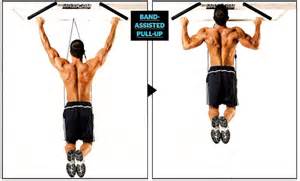
    Pull ups either assisted with a band or performed independently


    Diagonal hops in place


    In a superset alternate muscle groups(push/pull or upper body/lower body) are worked with low rest intervals(~30 sec.). The superset may be popular but there’s room for improvement. Those who know my blog will recall Strength from the ground up this involves compound movement (i.e. squat, lunge, step up).  Using concepts such as compound movement and plyometrics (i.e.hops, jumps, throws) you will alternate the types of muscle used and the type of energy used (creatine vs. glucose). This type of superset will allow you to recover in the lower body & strengthen the upper body, then switch that on your alternate days. Three strength exercises and two plyometric exercises for 3 to 4 sets should get the job done for medium level enthusiast. Form is always important and performing bad repetitions reinforces bad patterns so work until you see your form suffer then stop. Below are examples of exercise that could be an alternate workout.

    Wall ball squat throw (plyometric)

    Overhead squat (compound strength)


    VO2 Max
    Another way of getting the most bang for your exercise buck would be a VO2 max workout. This type challenges your aerobic system and is one of the best calorie burners you can perform when time is a factor.  Your body is consuming the maximum amount of oxygen in this workout so it burns the largest amount of calories. 
    It’s a challenging workout, but it can be modified and scaled back according to your exercise level. It’s a superior workout  not only challenging the aerobic system (so it’s heart smart), but strengthening the muscles as well (anaerobic).  The rest intervals are  shorter than supersets (~15 sec.) and the exercise performed is done for the same amount of time (~15 sec.). 
    Exercise selection is important with this type of workout, it must be a compound exercise- Kettle bells are a great choice. Those who are interested in picking a great postural reinforcing exercise should check Kettle bell training out here. This workout can be performed for 15 to 30 minutes and in some of the more elite athletes up to an hour which would burn approximately 1600 calories (half a pound of fat)!


    Body weight blast

    The body weight blast is a simple workout but only in theory. It’s one to three exercises performed as fast as you can with the only rest period being absolutely what you need. Any compound exercise will do.
    A nice example is the burpee; (pictures below)
    squat,
    squat thrust,
    push-up,
    another squat thrust,
    back to standing,
    end with a jump.

    Another variant could include a circuit like this;
    Squat Jump,
    Kettle bell swing 
    end with a push-up.
    Start with 20 reps, then 19, 18 all the way down to 5. This is an amazingly hard workout sure to wipe you out quick and burn an enormous amount of calories. These types of workouts are frequently put on in group exercise classes at places like CrossFit, we have done some work with the cross-fit organization  here in West Chester  & found them to be knowledgeable, amazing, motivating & fun.

    Squat thruster or Burpee

    Kettlebell swing courtesy of Pavel

    Bottoms up push up

    As mentioned before; time can be our greatest challenge, especially during the holiday season! With child, work and home obligations it’s easy to see how we all treat our work outs like step children.  These are just a few of the intensity workouts. You’re only limited by your imagination, but feel free to explore my blog & check out the links to learn more! As always, please share this with a friend if you think it may benefit them.

     Today we provided principles, so you can adapt your own protocols, don’t hesitate to contact us with questions. 
    Please let us know you visited our blog by liking, commenting & sharing.


    Dr. Serafim is a Rehabilitation and a Strength and Conditioning Specialist. He lives and works in the Exton PA area and has devoted himself to furthering his understanding of movement related disorders. He teaches continuing education and operates a private practice. More information can be found at Kinetx.org and feel free to like us at our facebook page.
  • Feed Your Work out..Body Type and Sports Science

    Feed Your Work out..Body Type and Sports Science

    How your workout goes is dependent on what kind of pre workout nutrition
    you take in. It’s also impacted by how fast your body can get those
    calories ready to be burned.
    Last time we discussed how changing the way you look at food can make you leaner and healthier, today we will discuss how to make your workout more energetic by addressing the timing of your pre workout nutrition and hydration. 

    IDENTIFY YOUR BODY TYPE
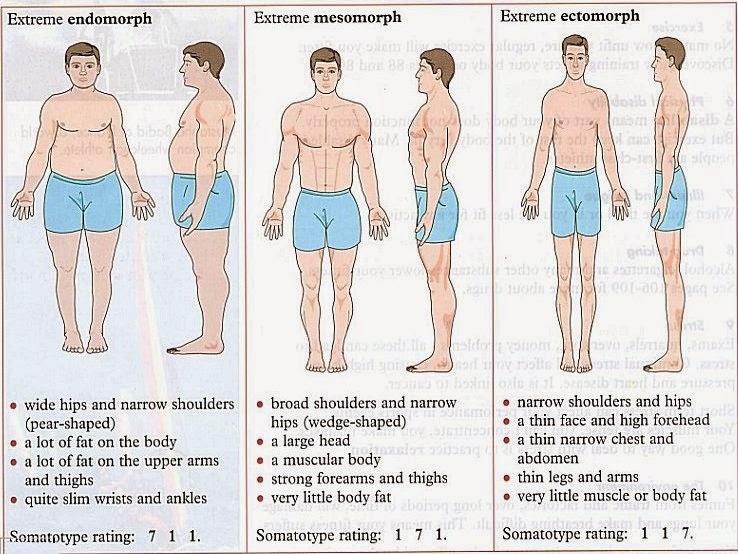
    Somatotyping has been around 80 years and was developed by a psychologist; William Sheldon. There have been many studies on this topic and while the percentages of Carbohydrate to Protein to Fat is debatable the metabolic styles seems to have been established. The folks at Precision Nutrition do a great job of breaking it down for us.


    There are 3 different body somatotypes; 
    Ectomorph:  The naturally tall skinny types.  This body type has a hard time adding size.
    Mesomorph:  Easy to add muscle, naturally lean.
    Endomorph:   Large Joint–bulky -like an NFL Lineman
    mesomorph-body-type-female-diet

    IT’S ALL ABOUT TIMING
    Depending on which type you are
    dictates how fast or slow the calories you eat become available, and
    that in turn determines how energetic you will feel when you exercise.
    From the time you eat until the time calories become available can vary
    from 30 minutes for a ectomorph to 90 minutes for an endomorph.  Most of us lie in between types, but
    knowing your type is
    helpful in planning and training style.  Timing your nutrition will
    give your body the energy it needs to have a successful workout.  

    Got H2O?
    Hydration is another key
    component, the National Strength and Conditioning Association recommends
    20 oz 2 to 3 hours pre workout and another 10 oz. ten minutes before
    the workout. This chart provided by Urinecolors.com is a great refrence to gauge your water levels. 

    Dehydration is a common problem, it’s essential in carrying away and expelling metabolic waste products, delivering fuel to the muscle. Your brain also has a high percentage of water (80%) and blood is also mostly water (83%).  Keep in mind how many diuretics you have taken in that day and the day before (coffee, salt and alcohol) and make sure to keep A balanced.  Hydration affects everything from how you feel to how plump your skin appears, so it’s importance really can’t be underrated. 

    Get Pissed!
    Urine color is a fast and
    easy way to monitor hydration-clear urine is best. Cramps, headaches dizziness, nausea and
    decreased performance can be signs that your may be dehydrated. Waiting for the feeling of thirst to hydrate means you’re already dehydrated so make sure you get enough. As a side note; filtered tap water has been shown to be better over all than bottled water, as leeching can occur with plastic water bottles; and there is no date on the bottles you can’t tell how long it’s been sitting there. I have a friend that’s in the business that confirmed that fact for me and also informed me that Dasani (Coca-cola Co.) was the worst offender of old water. 

    I’m Dr.
    Gene Serafim, here to make sure your workout is the best it can be.


     Today we provided principles, so you can adapt your own protocols, don’t hesitate to contact us with questions. 
    Please let us know you visited our blog by liking, commenting & sharing.


    Dr. Serafim is a Rehabilitation and a Strength and Conditioning Specialist. He lives and works in the Exton PA area and has devoted himself to furthering his understanding of movement related disorders. He teaches continuing education and operates a private practice. More information can be found at Kinetx.org and feel free to like us at our facebook page.