Does our posture affect what happens when we exercise?
This is the first in a multi part series, today we will discuss the detrimental effects of postural faults in the upper body and next time we will address the lower body. In exercise as well as in normal day to day movement, there is a complex interaction between how we move and how much we move. Most commonly how well or poorly we move is reflected in our capacity to move. If we move well we can move a lot, and conversely if we move with altered movement patterns, it can be less efficient, detrimental and many times pathological.
Postural faults are not your fault..well not entirely.

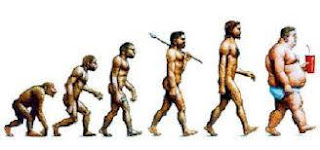
One of the most common thing we see in our office is poor posture, but why? Believe it or not, it’s the way we have evolved vs. our current environment. Over 30,000 years of recorded history, man has been active. Farming for vegetables, chasing or hunting for prey, it was not easy or sedentary type existence. Fast forward to the 21st century and we no longer need to hoe the field or track migratory prey over long distances. Our bodies were designed to move and perform tasks crucial to survival. Those tasks formed a balanced frame because the tasks were diverse. Not so much anymore.. For those who want to know more about primitive patterns, how we analyze it and how we get back to healthy movement click here for a power point presentation I created for fitness professionals.
We live in a flexion based society and most of us contribute to it in almost every aspect.. even when we weight train.

It’s no secret that we as a society have become not only complacent but we’re also stuck in the seated position for much too long. We spend more and more time at the work desk, and even more in the car and when all that is over we go to the gym and sit in all of these Precor and Hammer strength machines some more. All of this concentrates the work that we do in the front of our bodies; overdeveloping the front half, and making it dominant. The result is your posture collapsing forward. In essence we are feeding the poor posture with something we are told is good for us. Exercise is good for us, but much more so when it’s done correctly and not reinforcing postural faults.


Don’t worry Doc, I train back day too..
I’m ashamed to say I fell victim to this one too way back when, most think that training your lats with pulling type exercise will balance your posture, but it does not. The Latissimus doesn’t balance out the chest/pecs the middle and lower trapezius and rhomboids do. This thought process contributes to this Upper Crossed Syndrome which is widespread and an underlying factor in so many musculo-skeletal issues.
 |
| The chest has taken over and pulled the shoulders forward |
 |
| A healthy balance or the muscles that move us forward and backwards in the upper body |
 |
| The Lats(back) has taken over and rotated the shoulders in |
Take into account the previous discussed predisposition (the front of us taking over) and we quickly see that our workouts can be contributing to a myriad of pathological processes including but not limited to;
- Arthritis in the neck (cervical degeneration)
- Pinched nerve in the shoulder (thoracic outlet syndrome)
- Pinched nerve in the neck (cervical radiculitis)
- Tendinitis in the biceps
- Shoulder Bursitis(sub-acromial bursitis)
- Shoulder impingement
- Rotator cuff syndrome or tear
- Upper back spasms(thoralgia)
- Headaches
As a matter of fact, you don’t even need to exercise for the above problems to occur if you have the rounded shoulder syndrome. This is why it’s important to have good movement patterns before starting any exercise program. If we can begin with correct fundamental movement exercises, you need to be able to perform these movements (without bad mechanics) before you start an exercise program. These movements are;
- Upper body push(push up, plank)
- Upper body pull(TRX pull up, pull up)
- Squat
- Hip hinge or Deadlift
- Lunge
- Twist (rotation or anti-rotation)
Balance; the key to so many things
 |
| You’re not pulling this off without some good shoulder stabilizers |

Please let us know you visited our blog by liking, commenting & sharing.
